The Small Pulleys That Kill Alternators: What Your Mechanic Isn't Saying Before It's Too Late
There is a particular frustration that comes with replacing an alternator, paying the bill, and then watching the same electrical symptoms return within a year. For many American drivers, this scenario is not hypothetical — it is a lived experience that feels equal parts baffling and infuriating. The answer, in most cases, has nothing to do with the alternator itself. It has everything to do with two components so small and so inexpensive that they rarely earn a mention during routine service: the idler pulley and the belt tensioner.
At Carshen Garage, we have seen this pattern repeat itself more times than we care to count. A vehicle comes in with a failing alternator. The alternator is replaced. The vehicle returns months later with the same complaint. The root cause — worn pulleys that were never addressed — continues grinding away at the new part until it, too, gives out prematurely.
What These Components Actually Do
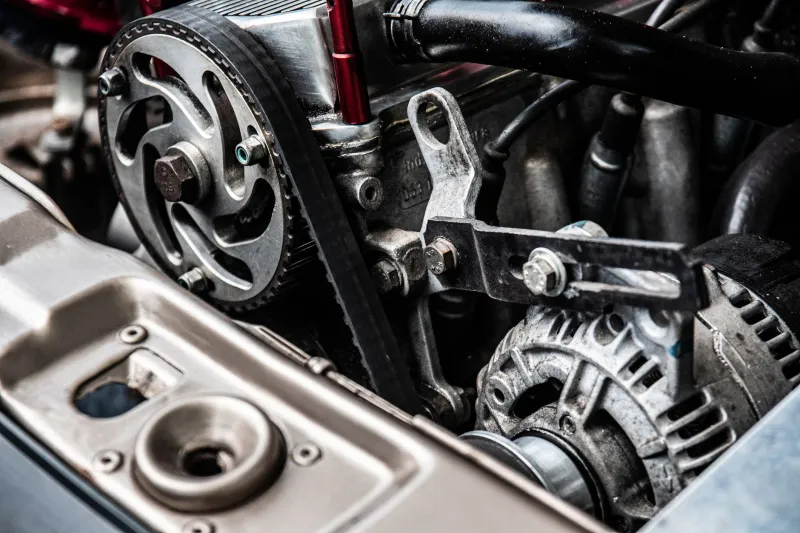
To understand why these pulleys matter so much, it helps to understand the system they belong to. Your serpentine belt is a single continuous loop that transfers power from the engine's crankshaft to every belt-driven accessory on the vehicle — the alternator, power steering pump, air conditioning compressor, and water pump, among others. It is an elegantly efficient design, but it depends on more than just the belt itself.
The tensioner pulley is a spring-loaded assembly that maintains consistent pressure on the serpentine belt. Without proper tension, the belt slips. When the belt slips, the alternator shaft does not spin at the speed the charging system requires, and the battery begins to drain.
The idler pulley serves a different but equally critical function. It redirects the belt along its intended path and keeps it tracking smoothly around each component. Idler pulleys are typically fixed — they do not move — but they spin continuously whenever the engine is running.
Both components use internal bearings that are subject to heat, friction, and the accumulation of tens of thousands of miles. Like all bearings, they wear. The difference is that most maintenance schedules — and many service advisors — treat them as permanent fixtures rather than wear items.
How a Worn Pulley Destroys an Alternator
The failure mode is gradual, which is precisely why it is so dangerous. A tensioner that has lost spring tension allows the belt to intermittently slip, particularly under load — when the air conditioning kicks on, when you accelerate sharply, or when multiple electrical accessories are operating simultaneously. Each slip event sends an inconsistent rotational signal to the alternator, forcing its internal voltage regulator to compensate continuously. Over time, this irregular demand accelerates wear on the alternator's brushes, bearings, and diode pack.
A worn idler pulley introduces a different kind of stress. As the bearing inside the pulley deteriorates, it creates wobble. That wobble introduces lateral forces on the serpentine belt that it was never designed to absorb. The belt begins to wear unevenly, and those same lateral forces transfer directly to the alternator's shaft bearing. A component engineered to spin on a single axis is now absorbing off-axis stress with every revolution.
By the time the alternator fails — usually announced by a battery warning light, dimming headlights, or a whining noise under the hood — the idler and tensioner pulleys have often been doing damage for months. Replace only the alternator, and you are installing a new component into the same hostile environment that destroyed the last one.
Why These Parts Are Rarely Mentioned
The economics of automotive repair are not always aligned with the long-term interests of the vehicle owner. An alternator replacement is a visible, billable repair. Idler and tensioner pulleys, by contrast, are inexpensive parts — often $20 to $60 each — and their replacement requires labor that is already largely covered when the serpentine belt or alternator is being serviced. Recommending them proactively cuts into a shop's parts margin without adding significant labor revenue.
This is not necessarily a conspiracy. In many cases, service advisors and technicians are simply operating under time pressure, working from inspection checklists that do not flag these components unless they have already failed visibly. A pulley with a deteriorating internal bearing may spin freely by hand and show no obvious wobble during a quick visual inspection. The problem only becomes apparent when the engine is running and the bearing is under load.
At Carshen Garage, our diagnostic approach includes listening to these components under operating conditions, not merely looking at them on a cold, stationary engine.
The Signs You Should Not Ignore
Several symptoms can indicate that your tensioner or idler pulley is beginning to fail. None of them are dramatic on their own, which is why they tend to be dismissed until something expensive breaks.
- A chirping or squealing noise from the front of the engine, particularly on startup or acceleration, often indicates belt slippage caused by a weak tensioner.
- A grinding or rattling sound that changes with engine RPM can point to a failing idler pulley bearing.
- Visible belt wear — fraying edges, glazing, or an uneven wear pattern — frequently indicates misalignment or inconsistent tension rather than a defective belt.
- A battery warning light that appears and disappears, especially under electrical load, may reflect alternator output fluctuations caused by belt slippage.
- Excessive belt movement when the engine is running is a visible sign that tensioner spring pressure has weakened.
If your vehicle is exhibiting any of these symptoms, a comprehensive inspection of the entire belt drive system — not just the belt — is warranted.
What Proactive Maintenance Looks Like
The most cost-effective approach is to treat the serpentine belt, tensioner, and idler pulley as a system rather than as individual components. When any one of them reaches replacement mileage or shows signs of wear, the others should be evaluated carefully and replaced if there is any doubt.
Most manufacturers suggest serpentine belt inspection beginning around 60,000 miles, with replacement typically occurring between 80,000 and 100,000 miles. Tensioner and idler pulleys do not always follow the same timeline, but it is reasonable to replace them concurrently with a belt replacement — the additional parts cost is modest, and the labor overlap makes it the most economical window to do the work.
If your alternator has already failed and is being replaced, insist that the shop inspect and, if appropriate, replace both the tensioner and idler pulley before the new alternator goes in. The incremental cost of doing so at that moment is a fraction of what a second alternator replacement will cost you twelve months from now.
The Broader Principle
The serpentine belt system is a useful illustration of something Carshen Garage emphasizes consistently: major component failures rarely happen in isolation. An alternator does not simply wear out on its own schedule, independent of everything around it. It operates within a mechanical ecosystem, and the health of that ecosystem determines how long any individual part will last.
Diagnosing only the component that has visibly failed — without investigating what may have contributed to its failure — is an approach that produces short-term repairs and long-term frustration. Understanding the relationship between your tensioner, your idler pulley, and your alternator is not arcane mechanical knowledge. It is the kind of informed awareness that protects your vehicle and your wallet, one maintenance interval at a time.