Maintenance Schedules Are Written for the Dealership's Benefit, Not Yours — Here's How to Build One That Actually Is

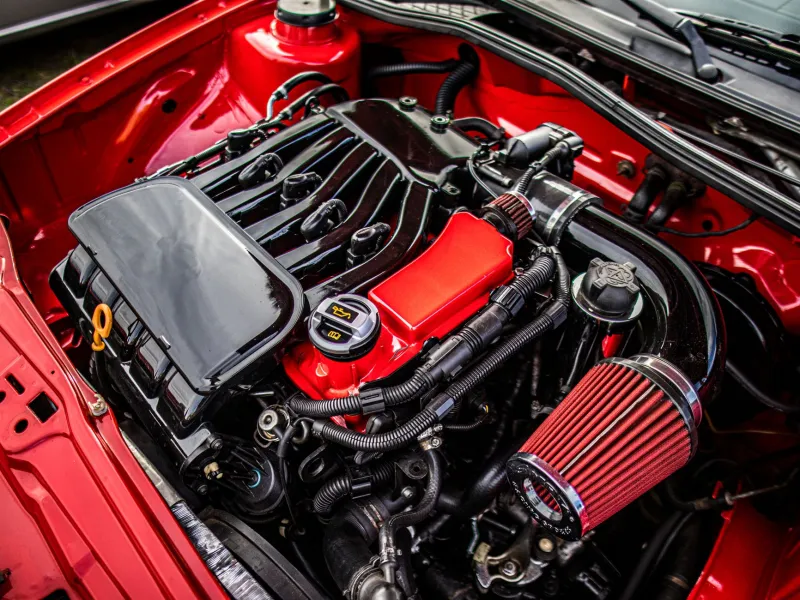
Photo by Photo by Anastasiia Krutota on Unsplash on Unsplash
When you bring your vehicle into a dealership service department, the advisor at the counter is working from a checklist. That checklist has your mileage on it, and beside each item is a box waiting to be checked — and a dollar figure waiting to be charged. The assumption built into that process is that the schedule printed in your owner's manual is both authoritative and universal. Neither of those things is entirely true.
Manufacturer maintenance intervals are written to satisfy multiple competing interests simultaneously: engineering conservatism, warranty liability, dealer profitability, and the need to produce a single document that applies to millions of vehicles across wildly different environments. A car owned by a retired schoolteacher in Scottsdale, Arizona, who drives twelve miles a day in 95-degree heat is not the same maintenance proposition as the same model owned by a contractor in Minneapolis who puts 30,000 miles a year on it hauling equipment through winter slush. The schedule does not know the difference. Your mechanic should.
What "Severe Duty" Actually Means — And Why Most Drivers Qualify
Buried in most owner's manuals is a section distinguishing between "normal" and "severe" driving conditions. The severe category typically includes short trips under five miles, frequent stop-and-go traffic, towing, extreme temperatures, dusty environments, and mountainous terrain. Read that list again. If you live in any major American metropolitan area — Los Angeles, Chicago, Houston, Atlanta, New York — you almost certainly qualify for the severe schedule, not the standard one.
Dealerships rarely volunteer this distinction unless it justifies a more frequent service visit. The irony is that the same interval structure that nudges urban drivers toward unnecessary services also gives rural highway drivers a false sense of security by suggesting they need attention sooner than they do. The schedule is not wrong, exactly — it is simply indifferent to your specific situation.
The Services Most Likely to Be Recommended Before They're Needed
Certain items appear on service menus with a regularity that outpaces their actual necessity. Understanding which ones deserve scrutiny can save a significant amount of money annually.
Fuel system cleaning. Unless your vehicle is exhibiting specific symptoms — rough idle, hesitation, poor fuel economy that cannot be attributed to other causes — a fuel system flush performed on a schedule rather than in response to a condition is largely a revenue line item. Modern gasoline already contains detergent additives. Most vehicles operating on fresh fuel from reputable stations will not accumulate the deposits that make this service necessary at the intervals it is typically suggested.
Cabin air filter replacement. This is a legitimate maintenance item, but the recommended interval often bears no relationship to the actual condition of the filter. A vehicle driven primarily on paved suburban roads in the Pacific Northwest will have a dramatically cleaner cabin filter at 15,000 miles than one driven on gravel roads in New Mexico at the same interval. Pull the filter and look at it. That is the only interval that matters.
Coolant flushes. The chemistry of modern long-life coolant is well established — it does not degrade on a calendar schedule under normal conditions. What matters is the actual pH and corrosion inhibitor concentration of the fluid in your specific vehicle. A simple test strip, available at any auto parts store, will tell you more about whether your coolant needs replacement than a mileage number printed in 2019 ever could.
Transmission fluid. Some manufacturers list this as a sealed, lifetime fluid requiring no service. Independent research and the experience of professional technicians tell a different story — particularly in vehicles used for towing or driven in high-heat environments. The answer is not to follow the dealer's upsell or ignore the fluid entirely. It is to have the fluid inspected and tested at reasonable intervals by a technician you trust.
The Real Variables That Should Drive Your Schedule
A genuinely useful maintenance calendar is built on four factors: your annual mileage, your typical trip length, your operating environment, and the current condition of the vehicle's fluids and wear components.
Annual mileage determines how quickly mileage-based intervals arrive. A driver who puts 8,000 miles per year on a vehicle may find that time-based degradation — particularly of rubber components and fluids — becomes the relevant factor before mileage thresholds are ever reached.
Trip length matters enormously for engine oil, battery health, and fuel system cleanliness. Short trips that never allow the engine to fully reach operating temperature accelerate wear in ways that a simple mileage counter does not capture.
Climate and geography affect nearly every system on the vehicle. Corrosion from road salt is a maintenance variable that simply does not exist in desert climates. Extreme heat degrades rubber, plastics, and battery capacity in ways that moderate climates do not. A maintenance plan that ignores where you live is incomplete by definition.
Actual component condition is the variable that the printed schedule cannot account for at all. A professional inspection — not a service advisor's visual walk-around, but a thorough examination by a qualified technician — provides information that no mileage number can replicate. Brake pad thickness, tire wear patterns, fluid condition, belt integrity, and suspension component health are all observable. Observing them is the foundation of rational maintenance planning.
How to Build a Schedule That Serves You
Start with your owner's manual, but treat it as a starting point rather than a directive. Identify which driving category you actually fall into — normal or severe — and apply that interval framework honestly. Then overlay your actual usage patterns: how many miles per year, how long your typical trips are, what climate you operate in.
For fluid-based services, invest in actual testing rather than calendar replacement. Oil analysis, coolant testing, and transmission fluid inspection provide objective data. For wear components — brakes, tires, belts, hoses — commit to a regular inspection cadence with a technician you trust, separate from any service appointment. An inspection that is not tied to a transaction is far more likely to give you an honest picture.
Finally, keep records. A documented service history allows a competent technician to see patterns, identify anomalies, and give you advice that is grounded in the actual history of your specific vehicle rather than the generic assumptions embedded in a manufacturer's schedule.
The Cost of Getting This Right
The goal here is not to avoid spending money on your vehicle. Deferred maintenance is genuinely expensive — sometimes catastrophically so. The goal is to spend that money in response to actual need rather than in response to a schedule designed with interests other than yours in mind.
A vehicle properly maintained according to its real-world conditions will last longer, perform more reliably, and cost less over time than one serviced on a rigid manufacturer schedule applied without judgment. That outcome requires a working relationship with a technician who is willing to tell you when something does not need to be done — and that is exactly the kind of honest guidance that separates a trustworthy garage from a service department running a checklist.