Brake Neglect Has a Price Tag — And It's Far Steeper Than You Think
Most drivers are aware, on some level, that brakes require periodic attention. Yet a surprising number of vehicle owners treat brake maintenance the same way they treat a slow-dripping faucet — something to address eventually, once it becomes truly inconvenient. The problem with that philosophy, when applied to a safety system that absorbs thousands of pounds of kinetic energy on every stop, is that "eventually" often arrives with a much larger invoice than necessary.
Understanding exactly how brake systems degrade — and how each neglected component accelerates wear on the next — is the clearest argument for staying ahead of service intervals rather than waiting for an obvious failure.
How the Brake System Actually Works Against You When Ignored
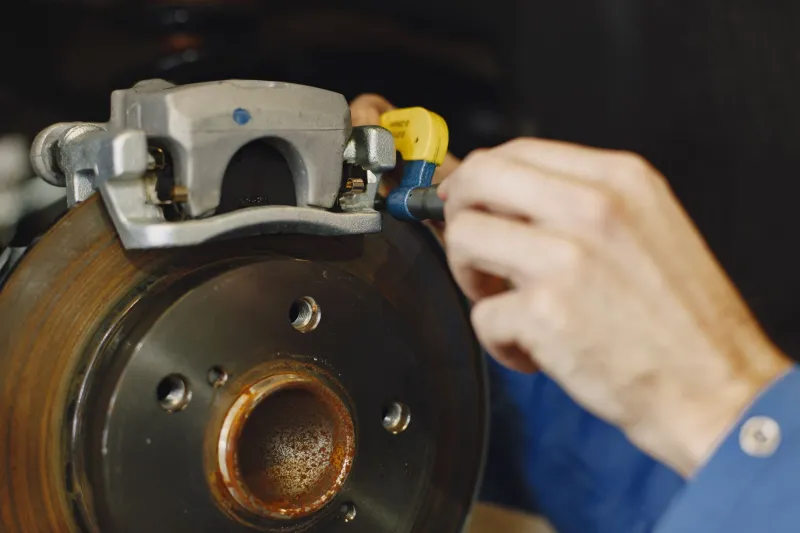
A modern disc brake system is elegantly interdependent. The brake pad presses against a rotor to create friction; hydraulic fluid transmits pedal pressure through calipers; the rotor dissipates heat; and the entire assembly is designed to wear in a controlled, predictable way. That predictability only holds when components are serviced on schedule.
When brake pads wear beyond their designed thickness — typically below 3 millimeters — the metal backing plate begins contacting the rotor directly. What was previously a controlled friction surface becomes metal-on-metal grinding. Rotors that might have been resurfaced or left in service are now scored and grooved, requiring full replacement. A pad replacement that might have cost $150 to $200 per axle has now escalated to $350 to $500 or more, simply because one component was allowed to damage another.
That is the first escalation. It is rarely the last.
Reading the Early Warnings Your Brakes Are Sending
Brake systems communicate. The challenge is that drivers often misinterpret or dismiss those communications until they become impossible to ignore.
Squealing or high-pitched noise during braking is typically the first signal. Most brake pads include a small metal wear indicator designed to contact the rotor and produce exactly this sound once pads approach minimum thickness. This is not a nuisance — it is a deliberate engineering feature. Treating it as background noise is a costly choice.
A spongy or soft brake pedal suggests something different: air in the brake lines or degraded brake fluid. Brake fluid is hygroscopic, meaning it absorbs moisture from the atmosphere over time. As water content increases, the fluid's boiling point drops. Under heavy braking — on a long highway descent or in stop-and-go traffic — degraded fluid can vaporize, compressing under pedal pressure and producing that unsettling soft feel. The corrective measure, a brake fluid flush, typically costs between $80 and $150. Ignoring it risks brake fade or complete hydraulic failure.
Longer stopping distances are perhaps the most dangerous symptom because they are easy to rationalize. Drivers unconsciously compensate by pressing the pedal earlier or harder. The vehicle still stops — for now. But increased stopping distances indicate reduced system efficiency, whether from worn pads, glazed rotors, or compromised fluid. In an emergency stop situation, that extra distance is measured in feet that may not be available.
Vibration or pulsation through the pedal typically points to warped rotors. Rotors warp when subjected to uneven heat distribution, often because worn pads create localized hot spots. Mild warping that could have been corrected through resurfacing often progresses to the point where replacement is the only viable option.
The Cascade Effect: When One Component Fails the System
The financial argument for proactive brake maintenance is most clearly illustrated through what mechanics sometimes call the cascade effect. Each neglected component places additional stress on adjacent parts.
Worn pads damage rotors. Damaged rotors increase stress on calipers, which must work harder to achieve adequate clamping force. Overworked calipers can seize, causing uneven pad wear and pulling the vehicle to one side. A seized caliper that goes unaddressed can destroy a new rotor within weeks of installation. By the time a driver brings in a vehicle with a fully seized caliper, worn rotors on both sides of an axle, and degraded fluid, what began as a $200 pad replacement has grown into a $900 to $1,400 repair — and that estimate assumes the ABS system and brake lines remain unaffected.
In more severe cases, particularly with rear drum brakes that are inspected less frequently, complete brake failure becomes a genuine safety risk rather than a theoretical one.
What a Proactive Brake Inspection Actually Involves
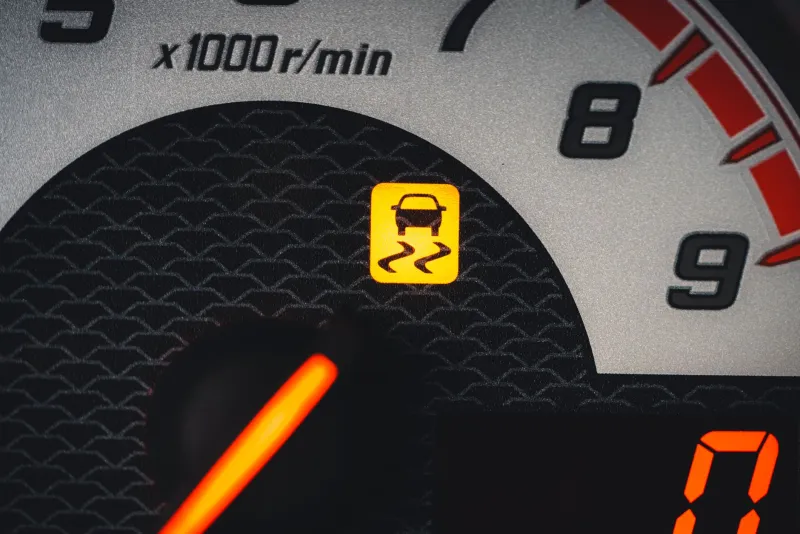
A thorough brake inspection at a qualified facility goes well beyond measuring pad thickness. A technician should evaluate rotor thickness and surface condition, inspect caliper operation and slide pins, assess brake hose integrity for cracking or swelling, check brake fluid condition and moisture content, and examine the parking brake mechanism. On vehicles with electronic brake assist or stability control, proper function of those systems depends entirely on the mechanical foundation beneath them.
At Carshen Garage, brake inspections are treated as diagnostic evaluations rather than visual spot-checks. The goal is to identify what is wearing, what is approaching its service limit, and what can be addressed now to prevent a more significant failure down the road.
Timing Your Brake Service: A Practical Framework
There is no universal mileage interval for brake service because driving patterns vary enormously. A vehicle used primarily for highway commuting will wear brakes far more slowly than one navigating urban stop-and-go traffic. Towing, mountainous terrain, and vehicle weight all accelerate wear.
As a general framework: brake pads should be inspected at every tire rotation — typically every 5,000 to 7,500 miles. Brake fluid should be tested for moisture content annually and replaced every two to three years regardless of appearance. Rotors should be measured for thickness and inspected for surface condition at each pad replacement.
The most important practice, however, is simply not dismissing early symptoms. A squeal, a soft pedal, a subtle vibration — these are the system doing exactly what it was designed to do. Responding promptly is not an expense. It is an investment in both safety and the long-term cost of vehicle ownership.
The brakes that stop your vehicle reliably today will only continue to do so if they receive the attention they are designed to require. The cost of that attention, measured against the alternative, is never the larger number.