What Your Dashboard Is Trying to Tell You — And Why Silence Is Costing You Thousands
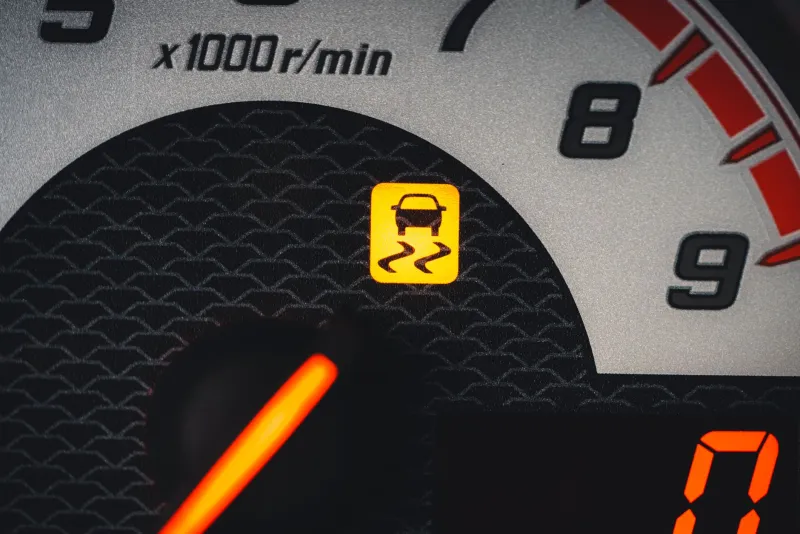
There is a moment almost every driver has experienced: a small amber or red symbol flickers to life on the instrument cluster, and after a brief moment of concern, daily life resumes as normal. The car still starts. It still drives. The light, it seems, can wait.
At Carshen Garage, we have built our reputation on transparency and technical excellence — and that means being honest with our customers, even when the truth is uncomfortable. The reality is this: ignoring a warning light is rarely a neutral decision. In most cases, it is a financial gamble, and the house almost always wins.
Our senior technicians have collectively witnessed thousands of vehicles arrive at our bays with preventable damage. What began as a ten-dollar sensor replacement evolved into a multi-thousand-dollar engine overhaul. This article is their message to you.
The Check Engine Light: America's Most Misunderstood Symbol
No warning light is more universally dismissed than the check engine light. Because it can illuminate for reasons as minor as a loose gas cap, many drivers have come to treat it as background noise. That assumption, however, is precisely what leads to expensive outcomes.
The check engine light is connected to your vehicle's onboard diagnostics system, which monitors hundreds of parameters simultaneously. When it activates, it could be flagging a failing oxygen sensor, a misfiring cylinder, a catalytic converter operating below efficiency, or early signs of transmission stress. Without a proper diagnostic scan — not just a code reader from the local auto parts store — there is no way to know which of those scenarios applies to your vehicle.
One of our lead technicians recently described a case where a customer had driven with an illuminated check engine light for approximately four months. The original fault code pointed to a lean fuel mixture — a condition that, when caught early, typically involves cleaning or replacing a fuel injector. By the time the vehicle arrived at our shop, the prolonged lean condition had caused significant wear on two cylinders. The repair cost had multiplied by a factor of nearly eight.
The Oil Pressure Warning: A Red Light That Demands Immediate Action
If the check engine light is the most ignored warning, the oil pressure warning light is arguably the most dangerous to dismiss. Unlike amber advisory lights, a red oil pressure indicator is a critical alert. It means your engine may not be receiving adequate lubrication at that moment.
Engine components — pistons, crankshafts, camshafts — operate with extraordinarily tight tolerances. Without proper oil pressure, metal contacts metal with nothing in between. Within minutes, irreversible scoring and bearing damage can occur. Within a longer drive, an engine can seize entirely.
A seized engine is not a repair. It is a replacement. Depending on the make and model, that can mean anywhere from $4,000 to well over $10,000 in parts and labor. Contrast that with an oil pressure issue caught early, which may involve nothing more than an oil change, a pressure sensor replacement, or a minor oil pump service.
Our advice at Carshen Garage is unambiguous: if a red oil pressure light activates while you are driving, pull over safely and immediately. Do not drive to the nearest shop. Call for assistance.
The Temperature Gauge: Overheating Is Never a Minor Problem
Coolant temperature warnings represent another category where delay consistently transforms manageable repairs into major ones. Modern vehicles are engineered to operate within a precise thermal range. When the cooling system fails — whether due to a coolant leak, a faulty thermostat, a compromised water pump, or a failing radiator — temperatures climb rapidly.
An overheating engine can warp cylinder heads, damage head gaskets, and in severe cases, crack the engine block itself. A blown head gasket repair typically runs between $1,500 and $2,500 at most reputable shops. A warped cylinder head adds considerably more. A cracked block often renders a vehicle economically unrepairable.
The frustrating part, from our technicians' perspective, is that the early signs of cooling system trouble — a slow coolant leak, a thermostat sticking slightly — are inexpensive to address. A temperature warning light that appears and disappears intermittently is not a system functioning correctly. It is a system beginning to fail.
Tire Pressure Monitoring Systems: More Than Fuel Economy
The tire pressure monitoring system, or TPMS, light is perhaps the most frequently dismissed warning on modern vehicles. Drivers often assume it is a minor inconvenience related to seasonal temperature changes, add a few pounds of air, and move on.
Understanding what sustained under-inflation actually does to a tire changes that perspective. Tires operating below recommended pressure generate excess heat, experience accelerated tread wear along the outer edges, and become structurally compromised over time. A blowout at highway speed is a safety event, not merely an inconvenience.
Beyond the tire itself, improper inflation affects wheel alignment wear rates, suspension component stress, and fuel consumption. A TPMS sensor that remains active after inflation may indicate a failing sensor, a slow puncture, or a valve stem issue — all of which deserve professional attention.
The Brake System Warning: No Room for Compromise
Few systems on a vehicle are as directly tied to occupant safety as the brakes. A brake warning light can indicate low brake fluid, worn brake pads triggering a wear sensor, or — more seriously — a hydraulic imbalance within the braking system itself.
Driving with a brake warning active is, in our professional judgment, never acceptable. Brake fluid that appears low may signal a leak in the hydraulic lines. A hydraulic failure at highway speed or in heavy traffic can have consequences far beyond any repair bill.
At Carshen Garage, brake inspections are among the most straightforward services we offer. In many cases, a brake warning leads to a routine pad and rotor replacement — a predictable, manageable cost. Postponing that service until brake fade or pedal failure occurs is a risk no driver should take.
A Final Word From Our Team
Our technicians are not in the business of creating alarm where none is warranted. Not every warning light represents an emergency. Some are advisory. Some are calibration reminders. But every warning light represents a communication from your vehicle's systems — a communication that deserves a professional response.
At Carshen Garage, we believe that an informed customer is a well-served customer. We do not upsell unnecessary repairs, and we do not minimize genuine concerns. When a warning light brings you to our shop, our goal is to give you an honest assessment and a clear path forward.
The cost of a diagnostic appointment is almost always a fraction of the cost of ignoring what your dashboard is trying to tell you. We encourage every driver to treat those warning lights with the seriousness they deserve — not out of fear, but out of respect for both your vehicle and your financial wellbeing.