Your OBD-II Reader Got You a Code — Here's Why That's Only Half the Story

The democratization of vehicle diagnostics has been one of the more positive developments in automotive ownership over the past two decades. Since 1996, every passenger vehicle sold in the United States has been required to include a standardized OBD-II port, and the consumer tools that plug into that port have become increasingly affordable and accessible. For roughly $30 to $150, any driver can pull a fault code from their vehicle and look it up online within minutes.
That capability is genuinely useful, and at Carshen Garage, we respect drivers who take an active interest in understanding their vehicles. However, we also see the consequences — regularly — of what happens when a fault code is treated as a complete diagnosis rather than an initial data point. This guide is intended to help you understand what consumer tools do well, where they fall short, and how to make smarter decisions when your vehicle starts communicating problems.
What a Consumer OBD-II Scanner Actually Does
To understand the limitations of a basic code reader, it helps to understand what it is actually doing. When your vehicle's powertrain control module detects a parameter operating outside its acceptable range, it stores a diagnostic trouble code — commonly called a DTC — and in many cases illuminates the check engine light. A consumer scanner reads that stored code and displays it to you.
The code itself is a category designation. P0300, for example, indicates a random or multiple cylinder misfire. P0420 points to catalyst system efficiency below threshold on bank one. P0171 suggests the system is running lean. These codes tell you where the vehicle's computer detected an anomaly. They do not tell you why that anomaly occurred.
This distinction — between detection and causation — is where DIY diagnostics most commonly breaks down.
The Misdiagnosis Problem: Real Cases, Real Costs
Consider the P0420 code mentioned above. Online forums and basic code lookup tools will almost universally suggest that this code means a failing catalytic converter. That interpretation is not wrong — a degraded catalytic converter is one possible cause. But it is also triggered by exhaust leaks upstream of the oxygen sensor, a faulty downstream O2 sensor providing inaccurate readings, engine oil consumption contaminating the catalyst, or even certain fuel quality issues.
A catalytic converter replacement on a mid-size sedan can run between $800 and $1,600 in parts and labor. If the actual cause was a $90 oxygen sensor or a $40 exhaust gasket, that is an expensive misread.
At Carshen Garage, we have received vehicles where owners — or well-meaning independent mechanics using basic tools — replaced catalytic converters based on a P0420 code, only to have the light return within weeks. The underlying cause had never been identified. In one recent case, a customer had replaced the converter twice at another facility before arriving at our shop. Our technicians identified a persistent small exhaust leak that had been skewing sensor readings throughout. The actual repair cost less than $200.
Similarly, misfire codes like P0300 or individual cylinder misfire codes such as P0302 can originate from spark plugs, ignition coils, fuel injectors, compression loss, vacuum leaks, or even timing chain stretch. A consumer scanner identifies the misfire. It cannot differentiate between these causes without additional testing.
What Professional Diagnostic Equipment Actually Offers
The equipment used by trained technicians at a professional facility goes considerably beyond reading stored codes. Here is what that expanded capability looks like in practice.
Live Data Streaming and Graphing Professional scan tools capture live sensor data across dozens of parameters simultaneously — fuel trims, oxygen sensor voltage waveforms, mass airflow readings, throttle position, coolant temperature, and more. Viewing these values in real time, and graphing them over a drive cycle, reveals patterns that static code reading cannot. A fuel trim that spikes under load but normalizes at idle, for instance, points toward a specific category of fault that a code alone would never identify.
Bidirectional Control High-tier diagnostic platforms allow technicians to command specific vehicle components to activate or deactivate. This means an injector can be disabled temporarily to isolate a misfire, an EGR valve can be cycled to confirm its operation, or an ABS pump can be activated to test response. Consumer tools are almost entirely read-only. This bidirectional capability dramatically accelerates accurate diagnosis.
Manufacturer-Specific Codes and Data Standard OBD-II covers a defined set of powertrain codes, but manufacturers also embed proprietary fault codes — sometimes called enhanced or manufacturer-specific codes — that cover transmission, body, chassis, and supplemental restraint systems. A basic consumer scanner typically cannot access these. A professional tool with the appropriate software licenses reads the full picture.
Oscilloscope Testing Certain electrical faults — intermittent sensor failures, injector circuit issues, crank or cam sensor signal irregularities — are best diagnosed with an oscilloscope, which reads the actual voltage waveform produced by a component over time. A weak injector pulse that looks acceptable on a multimeter may reveal a clear anomaly on an oscilloscope trace. This level of analysis is simply not available to the average DIY toolkit.
Where DIY Diagnostics Genuinely Helps
This is not an argument against consumer tools. Used appropriately, a personal OBD-II reader provides real value. It can confirm whether a check engine light is still active before a smog inspection, help you understand what a shop is telling you before authorizing a repair, clear codes after a confirmed fix to verify the light does not return, and give you informed questions to ask your technician.
Knowing that your vehicle has stored a P0171 lean code before arriving at a shop means you can have a more productive conversation about what testing has been performed and what the proposed repair is based on. That kind of informed engagement is something we actively encourage at Carshen Garage.
Knowing When to Make the Call
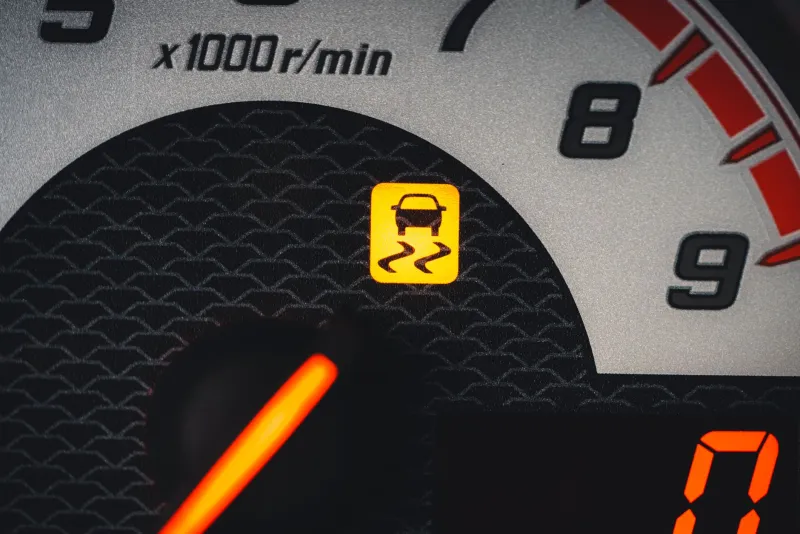
There are circumstances where professional diagnostics are not optional — they are necessary. Multiple codes stored simultaneously almost always indicate a root cause that requires systematic testing to isolate. Intermittent symptoms that do not reliably trigger codes require live data capture during the fault condition. Any code involving safety systems — ABS, airbags, stability control, or the brake system — demands professional attention. And whenever a repair has already been attempted based on a code and the problem persists, the diagnostic process needs to start over with better tools.
At Carshen Garage, our diagnostic process is designed to give you clarity, not just a code number. We explain what we found, why we believe it is the root cause, and what the repair involves before any work is authorized. The goal is always an accurate repair the first time — not a parts-replacement guessing game.
Your code reader is a useful starting point. Let our technicians take it from there.