The Forgotten Filter Breeding Ground: What's Actually Living Behind Your Dashboard
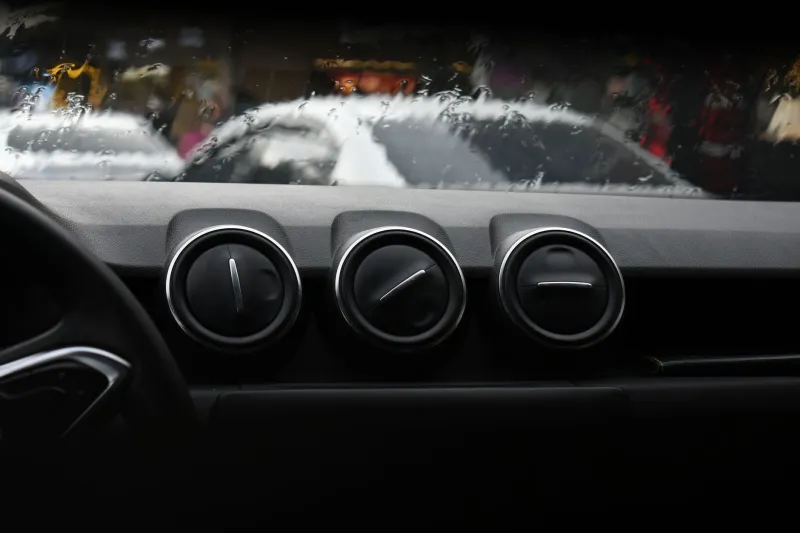
Most drivers can tell you when they last changed their oil. A fair number can recall their last tire rotation. But ask the average American motorist when they last replaced their cabin air filter, and you will typically be met with a blank stare — or a confident assertion that they have never done it at all.
That response is more common than it should be, and it is not entirely the driver's fault. The cabin air filter is rarely flagged during routine service visits with the same urgency as oil changes or brake inspections. It sits quietly behind your glove box or beneath your dashboard, doing its job until it can no longer do it — and by the time most people notice something is wrong, the filter has been failing them for months.
At Carshen Garage, we see the consequences of this neglect regularly. What follows is an honest account of what a neglected cabin air filter actually contains, what it costs your vehicle, and what it may be costing your health.
What the Cabin Air Filter Is Actually Doing
The cabin air filter serves as the primary barrier between the outside environment and the air circulating inside your vehicle. Every time you run your HVAC system — whether for heat, air conditioning, or simple ventilation — outside air is drawn through this filter before it reaches the cabin.
A clean filter captures road dust, pollen, mold spores, exhaust particulates, insects, and debris. In urban environments, it also intercepts fine particulate matter from traffic pollution. In rural areas, agricultural dust and organic material are common culprits. The filter is doing serious work with every mile you drive.
Most manufacturers recommend replacement every 15,000 to 25,000 miles, though this interval shortens considerably in high-pollution environments, dusty climates like the American Southwest, or heavily wooded areas prone to pollen saturation.
What Builds Up When You Ignore It
The contents of a severely neglected cabin air filter are genuinely unpleasant to examine. At Carshen Garage, technicians routinely pull filters from vehicles with 40,000 or even 60,000 miles of accumulated debris — filters that were never replaced after the original installation.
What accumulates includes:
- Compacted road dust and fine particulate matter that has fused into a dense, nearly solid layer across the filter media
- Pollen deposits that can remain allergenic even after the pollen season has passed
- Mold and mildew colonies, particularly in humid climates like the Southeast and Gulf Coast, where moisture becomes trapped in the filter material
- Insect fragments and larvae, which are more common than most drivers would prefer to know
- Organic debris — leaves, seeds, and plant matter — that decomposes within the filter housing
- Bacterial growth, encouraged by the warm, damp conditions that develop inside HVAC housings during seasonal transitions
The mold issue deserves particular attention. Once mold establishes itself in the filter or the surrounding housing, simply replacing the filter may not fully resolve the contamination. The musty odor that many drivers attribute vaguely to their car's age is frequently traceable to exactly this source.
The Health Implications Are Not Trivial
Breathing air that passes through a contaminated filter — or in some cases, bypasses a filter so clogged that airflow is severely restricted — carries measurable health risks.
For allergy and asthma sufferers, a saturated pollen-laden filter can actively worsen symptoms rather than reduce them. For individuals with respiratory sensitivities, mold spores circulating through the cabin represent a genuine irritant. Children and elderly passengers, who may spend extended time in vehicles, face proportionally greater exposure.
Perhaps more insidiously, a clogged filter that can no longer pass adequate airflow creates a pressure differential that can pull air through gaps and seams in the HVAC housing — air that has bypassed filtration entirely. At that point, the filter is not merely ineffective; it is creating conditions worse than if it were absent.
The American Lung Association has consistently noted that indoor air quality — including vehicle cabin air — is a meaningful component of overall respiratory health. Your commute is not a trivial exposure window. The average American spends approximately 300 hours per year inside their vehicle.
What It Does to Your HVAC System
Beyond the health dimension, a clogged cabin air filter imposes a mechanical burden on your vehicle's HVAC system that compounds over time.
When airflow is restricted, the blower motor is forced to work harder to move the same volume of air. This accelerates wear on the motor itself, increasing the likelihood of premature failure. AC performance degrades noticeably — a system that once cooled the cabin in minutes may struggle to reach a comfortable temperature even on moderate days.
Defroster performance suffers as well, which becomes a safety issue during winter months when rapid windshield clearing is critical. Drivers in northern states — the Great Lakes region, New England, the Upper Midwest — who neglect this filter may find their defrosters working sluggishly during the months when they are needed most.
The evaporator coil, which sits downstream of the cabin filter, can also accumulate debris if the filter fails or becomes so overwhelmed that particles bypass it. Evaporator cleaning is a significantly more labor-intensive and expensive repair than a filter replacement.
The Cost Comparison That Puts It in Perspective
Cabin air filter replacement is among the least expensive maintenance services available. A quality aftermarket filter typically costs between $15 and $40 depending on the vehicle. Professional installation at a reputable shop adds minimal labor — the job takes most technicians less than fifteen minutes.
Contrast that with the downstream costs of neglect:
| Consequence of Neglect | Estimated Repair Cost |
|---|---|
| Blower motor replacement | $250 – $600 |
| Evaporator coil cleaning | $400 – $900 |
| Evaporator coil replacement | $900 – $1,800 |
| HVAC housing mold remediation | $200 – $500 |
| AC recharge following reduced efficiency | $150 – $300 |
The arithmetic is straightforward. A $25 filter replaced on schedule eliminates exposure to every line item in that table.
Why Mechanics Don't Always Catch It
This is a fair question, and the answer is partly structural. During a standard oil change or multi-point inspection, the cabin air filter is not always included in the inspection checklist — particularly at quick-lube operations where speed is prioritized. Some technicians will check it; many will not unless the vehicle is flagged for an HVAC complaint.
This is not necessarily negligence. It is a reflection of how service menus are structured and what customers request. The burden, unfortunately, falls on the driver to ask.
At Carshen Garage, cabin air filter inspection is a standard component of any comprehensive vehicle assessment. If you have not had yours checked recently — or cannot recall the last time it was replaced — that is a conversation worth having at your next service appointment.
The Action Is Simple. The Delay Is Not Worth It.
The cabin air filter is not a glamorous topic. It does not inspire the same concern as a failing transmission or a seized brake caliper. But its impact on your daily driving experience, your vehicle's long-term mechanical health, and the air quality inside your car is substantial and consistent.
If your AC feels less powerful than it once did, if you notice a musty odor when the fan is running, or if you simply cannot remember the last time the filter was replaced, treat that as sufficient reason to act. The cost is low. The alternative is not.