What Shops Don't Want You to Know About Serpentine Belt Pricing

A Simple Job With a Complicated Price Tag
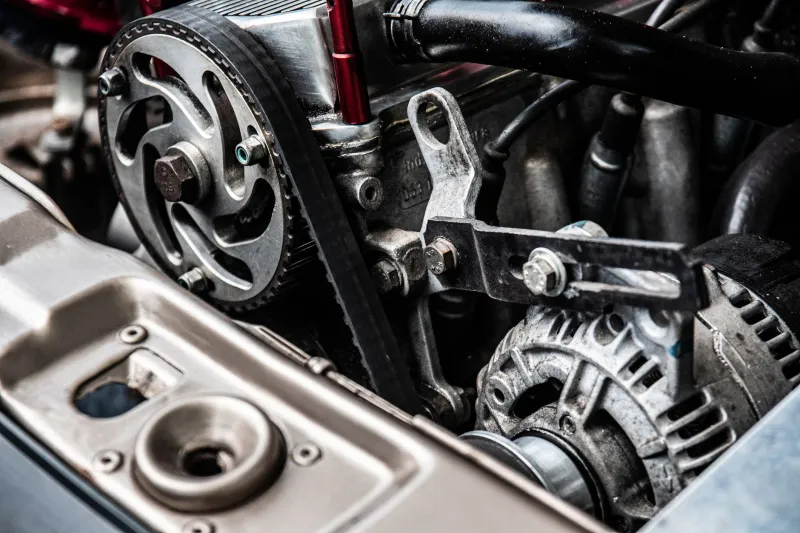
The serpentine belt is not a glamorous component. It is a single, looped belt that routes around several pulleys and drives critical systems — the alternator, power steering pump, air conditioning compressor, and water pump among them. When it wears out or snaps, the consequences are immediate and serious. Shops know this, and a segment of the industry has learned to leverage that urgency against the very customers they are supposed to serve.
A standard serpentine belt for a typical American passenger vehicle — a mid-size sedan, a light truck, a crossover SUV — retails at most auto parts stores for somewhere between $25 and $75. Gates, Dayco, and Continental are the dominant brands in this space, and their belts are widely regarded as OEM-equivalent quality. The installation itself, for most vehicles, takes a trained technician between 20 and 45 minutes. On certain European models or vehicles with tight engine bays, that time can stretch closer to an hour.
By any reasonable accounting, a fair total for this service — parts and labor combined — should fall somewhere in the range of $80 to $200 for the majority of vehicles on American roads today. So why do so many service invoices arrive at $350, $450, or higher?
The Anatomy of an Inflated Quote
The markup strategy typically operates on three levels, and understanding each one puts you in a far stronger position as a consumer.
Parts inflation is the most straightforward. Many dealerships and independent shops apply a markup of 100 to 200 percent on parts before they ever appear on your invoice. A belt that costs the shop $40 wholesale gets listed at $90 or $110. This is legal, common, and almost never disclosed proactively. The practice is industry-standard, but that does not mean it is immovable — more on that shortly.
Labor time padding is subtler and, in many cases, more costly. Most shops bill labor using a flat-rate guide — a standardized reference that assigns a set number of hours to each repair operation. The problem is that some shops bill the maximum time listed in that guide regardless of how quickly the actual work is completed. A technician who completes a serpentine belt swap in 25 minutes may still generate a ticket billing you for a full hour of labor at $150 per hour. You are paying for time that was never spent.
Bundled replacements are where the invoice can escalate dramatically. When a shop recommends replacing the belt, it is not unusual to see accompanying recommendations for the belt tensioner, the idler pulley, and occasionally the belt routing diagram clip — all added to the job as a package. Some of these recommendations are legitimate. A tensioner that is visibly worn, noisy, or failing to maintain proper belt tension absolutely should be replaced at the same time. However, tensioners and idler pulleys that are in perfectly serviceable condition are frequently included in quotes as standard practice, not as a response to any observed deficiency. Each of those components carries its own markup, and the labor to install them is often billed separately even when the incremental time required is minimal.
Dealership Quotes Versus Independent Shops
As a general rule, franchised dealerships charge more for serpentine belt service than independent garages. Part of this is attributable to higher overhead — dealerships carry larger facilities, more administrative staff, and the cost of maintaining brand-certified technicians. Some of it is attributable to the captive audience effect: drivers who bring their vehicles to the dealership for one reason often feel reluctant to challenge the additional service recommendations that follow.
Independent shops vary considerably. A reputable independent garage with skilled technicians and transparent pricing can offer genuinely competitive rates for this type of service. The challenge for consumers is that without a reference point, it is difficult to distinguish a fair independent shop from one that has adopted the same pricing practices as the dealerships it competes with.
How to Evaluate a Quote Before You Commit
The most effective tool available to any vehicle owner is a phone call — or several. Before authorizing any serpentine belt service, contact two or three shops in your area and request an itemized estimate. Ask specifically for the cost of the belt itself, the labor rate, and the estimated labor time. If a shop quotes you a single bundled price and declines to break it down, that is informative in itself.
You can also look up the retail price of the belt for your specific vehicle on any major parts retailer's website — RockAuto, AutoZone, Advance Auto Parts, and O'Reilly all list pricing publicly. This gives you a floor figure for the part and allows you to assess how significant the shop's markup actually is.
If the quote includes tensioner and idler pulley replacement, ask the technician to show you the existing components and explain specifically why they are recommending replacement. A professional with nothing to hide will walk you through the wear indicators — cracking, bearing noise, wobble, or visible fatigue. If the explanation amounts to "we always replace them at the same time," that is a policy decision, not a diagnosis.
When Bundled Replacements Are Legitimate
It would be misleading to suggest that tensioner and pulley replacement is never appropriate during a belt service. In many cases, it genuinely is the right call.
Belt tensioners are spring-loaded and wear over time. A tensioner that has reached the end of its service life will fail to maintain proper belt tension, leading to belt slippage, premature wear, and potential system failures down the road. If your vehicle has high mileage — generally above 100,000 miles — and the tensioner has never been replaced, a recommendation to address it alongside the belt is not unreasonable.
The distinction worth drawing is between a shop that inspects the components and recommends replacement based on observed condition versus one that reflexively bundles the parts into every quote without inspection. One is professional practice. The other is a revenue strategy.
What a Trustworthy Shop Looks Like
A shop that earns your confidence will provide an itemized estimate without being asked, explain the reasoning behind each recommended service, and give you the option to approve or decline individual line items. Reputable garages understand that a customer who feels respected and fairly treated is a customer who returns — and who refers others.
If a service advisor pressures you to authorize additional work immediately, suggests that driving away without the extra repairs is dangerous when the evidence does not support that claim, or becomes evasive when you ask for a breakdown of costs, those are signals worth taking seriously.
The serpentine belt is a critical component, and replacing it on schedule is genuinely important. What is not important is paying three times the reasonable cost to do so. Knowing what the job should cost — and why some invoices exceed that figure — is the foundation of making a sound decision in the service bay.