Your Factory Warranty Is Safer Than Dealers Want You to Believe: The Federal Law They Hope You Never Look Up
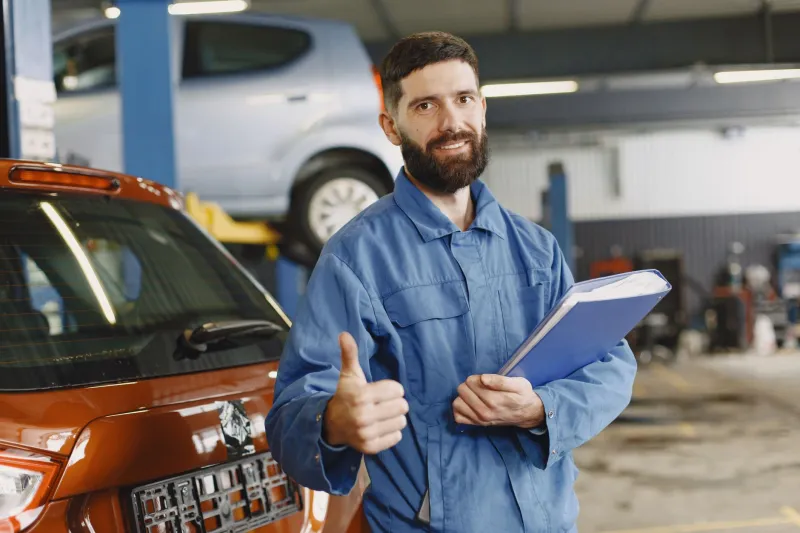
There is a persistent myth circulating in every dealership waiting room and service lane across the United States: take your car anywhere other than the dealership, and your factory warranty disappears. Service advisors rarely challenge this belief. In many cases, they quietly reinforce it. The result is that millions of American vehicle owners pay dealership labor rates for routine maintenance they could have had performed at a trusted independent garage — often for significantly less money — without surrendering a single day of warranty protection.
The truth is grounded in federal law, and it has been for decades.
The Law That Changes Everything
The Magnuson-Moss Warranty Act, passed by Congress in 1975, is the piece of legislation that governs consumer product warranties in the United States. Under this law, a manufacturer cannot legally void your warranty simply because you chose to have your vehicle serviced or repaired at an independent shop. The Federal Trade Commission has published clear guidance on this point, yet the information rarely makes its way into dealership conversations.
For a warranty to be voided under Magnuson-Moss, the manufacturer must demonstrate one of two things: either that the independent repair directly caused the failure in question, or that the aftermarket part used was defective and led to the damage. A routine oil change performed at a reputable independent garage, for example, does not give a manufacturer grounds to deny a warranty claim on your transmission — provided the service was completed with appropriate fluids and documented properly.
The burden of proof rests with the manufacturer. That is a critical distinction that most car owners never hear.
Why Dealerships Stay Quiet
The service department is one of the most profitable divisions within any franchise dealership. Labor rates at dealerships routinely exceed those at independent shops, sometimes by a substantial margin. When a customer believes their only safe option for warranty-compliant maintenance is the dealership, that customer becomes a captive revenue source for as long as the factory coverage lasts — which for many new vehicles now stretches three, five, or even ten years.
Dealerships are not legally obligated to educate customers about their rights under Magnuson-Moss. And so, in the absence of that conversation, the myth endures. A service advisor who mentions that customers are free to take their vehicle elsewhere is, in effect, redirecting revenue out of the department. The incentive structure makes silence the path of least resistance.
This is not an accusation of deliberate deception across the board — many individual service professionals are simply unaware of the full legal picture themselves. But the institutional result is the same: customers remain uninformed, and dealership service bays remain full.
What Independent Shops Need to Do Right
Choosing an independent garage does not eliminate all responsibility on the vehicle owner's part. Maintaining warranty coverage while using an outside shop requires attention to documentation and parts standards.
First, every service performed on your vehicle should be recorded in writing. Receipts, invoices, and service records should include the date, mileage, description of work performed, parts used, and the shop's contact information. If a warranty claim ever arises, this paper trail is your evidence that the vehicle was properly maintained.
Second, the fluids and parts used during service should meet or exceed the manufacturer's specifications. A quality independent shop will have access to the same OEM-specification oils, filters, and components that a dealership uses. Using the correct specification is not just good practice — it is your protection against any manufacturer argument that substandard materials contributed to a failure.
Third, it is worth understanding what your specific warranty covers and excludes. Powertrain warranties, bumper-to-bumper coverage, and emissions warranties each carry different terms. Reading the warranty documentation that came with your vehicle — or requesting a copy from the manufacturer — clarifies exactly what is at stake.
When a Dealer Does Try to Void Your Coverage
If a dealership or manufacturer attempts to deny a warranty claim on the basis that your vehicle was serviced at an independent shop, you have recourse. The FTC recommends documenting the denial in writing and filing a complaint with the agency directly. Many states also have consumer protection offices that handle warranty disputes.
In practice, a well-documented service history from a reputable independent shop makes such disputes relatively rare. Manufacturers understand that Magnuson-Moss creates legal exposure for improper warranty denials, and most will not pursue a denial that lacks a defensible causal argument.
If a dispute does escalate, an attorney familiar with consumer protection law can often resolve the matter quickly once the relevant statute is introduced into the conversation.
Choosing the Right Independent Shop Matters
The protections described above are only as strong as the shop performing the work. A garage that cuts corners, uses non-specification fluids, or fails to provide proper documentation undermines every advantage that Magnuson-Moss offers. The quality of the independent shop is the variable that determines whether your warranty protection holds.
Look for facilities with ASE-certified technicians, transparent invoicing practices, and a track record within your community. A shop that can demonstrate familiarity with your vehicle's manufacturer specifications — and that provides detailed written records for every service — is a shop that keeps your warranty intact and your vehicle in sound mechanical condition.
At Carshен Garage, thorough documentation and manufacturer-specification service standards are not optional practices. They are the foundation of every job that leaves the facility.
The Bottom Line
Federal law gives American car owners the right to choose where their vehicles are serviced without forfeiting factory warranty coverage. That right exists whether or not a dealership ever mentions it. Understanding the Magnuson-Moss Warranty Act transforms the conversation from one of dependency to one of informed choice.
Routine maintenance performed by a qualified independent garage — documented properly, completed with the correct parts and fluids — carries the same warranty validity as the same service performed at the dealership. The difference is often in the price, the wait time, and the relationship between the customer and the technician working on their vehicle.
The warranty is yours. The choice of where to protect it should be yours as well.