Your Tire Rotation Schedule Is Probably Wrong — Here's What to Do Instead
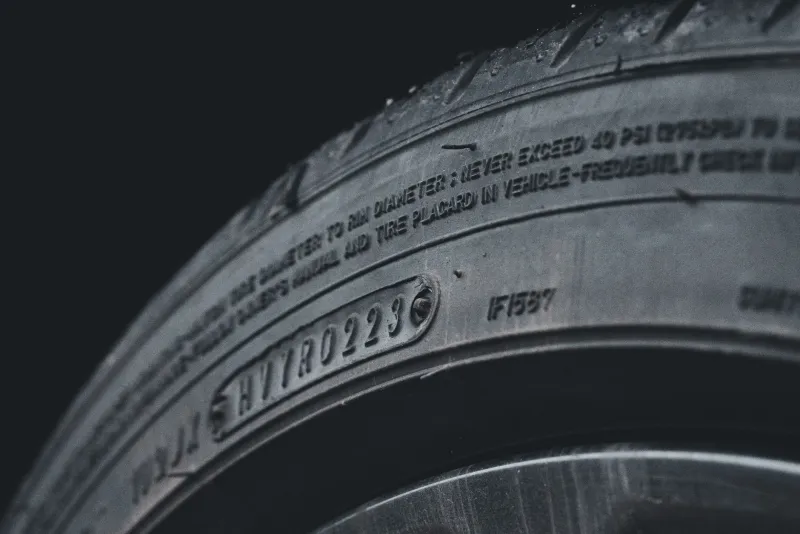
Walk into almost any dealership service department or quick-lube chain in the United States and ask when you should rotate your tires. The answer will almost certainly come back: every 5,000 miles, or with every oil change. It is a clean, easy-to-remember interval, and for the shops delivering that advice, it generates consistent service revenue. What it does not always generate is the best outcome for your tires.
The reality is more nuanced — and more useful. Tire wear is not a uniform phenomenon. It is shaped by your drivetrain configuration, your driving environment, the design of the tire itself, and even the roads you travel most frequently. A blanket interval treats all of these variables as if they do not exist. At Carshen Garage, we think drivers deserve a more precise framework.
Why the 5,000-Mile Rule Became Standard
The conventional rotation interval was established during an era when most passenger vehicles were rear-wheel drive, tire compounds were less sophisticated, and oil change intervals were shorter — typically 3,000 miles. Rotating at every oil change was a practical mnemonic that kept tire maintenance from being forgotten entirely.
As oil change intervals extended to 7,500 and then 10,000 miles with synthetic lubricants, and as front-wheel drive became the dominant configuration in American passenger cars, the logic behind the synchronized rotation schedule began to erode. Yet the recommendation largely persisted, carried forward by habit and the convenience of a simple rule.
Drivetrain Type Changes Everything
The single most important variable in determining how aggressively your tires wear — and therefore how urgently they need rotation — is your drivetrain configuration.
Front-Wheel Drive (FWD)
Front-wheel drive vehicles place the burdens of steering, acceleration, and a disproportionate share of braking on the front axle simultaneously. The result is accelerated front tire wear that can run two to three times faster than rear wear under normal driving conditions. For FWD drivers, the 5,000-mile interval is not excessive — it may actually be appropriate, particularly for drivers who log significant urban mileage with frequent stops and turns.
However, the rotation pattern matters as much as the interval. A simple front-to-rear swap is not always the optimal approach. A modified X-pattern or forward cross pattern, which moves front tires to the opposite rear positions and vice versa, more evenly distributes wear across all four tires over successive rotations.
Rear-Wheel Drive (RWD)
Rear-wheel drive vehicles distribute acceleration load to the rear axle while the front handles steering. Wear patterns are less extreme than FWD, and the differential in wear rates between front and rear is generally smaller. For most RWD passenger vehicles and light trucks under typical highway driving conditions, extending the rotation interval to 7,500 miles is reasonable and supported by current tire manufacturer guidance.
All-Wheel Drive and Four-Wheel Drive (AWD/4WD)
Here is where the 5,000-mile rule earns its most legitimate application — and where ignoring it can become genuinely costly. AWD systems, particularly those with sophisticated torque-vectoring differentials, are engineered to operate within a narrow tolerance of tire circumference variance across all four positions. When tires wear unevenly, the drivetrain compensates by transferring torque in ways it was not designed to sustain continuously.
On some AWD vehicles, a difference of as little as 2/32 of an inch in tread depth between axles can place measurable stress on the center differential or transfer case — components that carry repair costs in the $1,500–$3,500 range. For AWD owners, consistent rotation at 5,000- to 6,000-mile intervals is not overcautious. It is mechanical protection.
Modern Tire Technology Complicates the Picture Further
Contemporary tire design introduces additional variables that older rotation guidelines simply did not account for.
Directional tires — those with a tread pattern optimized to rotate in one specific direction — cannot be crossed from one side of the vehicle to the other without dismounting and remounting the tire on its wheel. This limits rotation to front-to-rear swaps on the same side, which reduces the equalization benefit of rotation and may justify more frequent service intervals to compensate.
Performance tires with staggered fitments, common on sports cars and some performance SUVs, use different tire widths front and rear. These cannot be rotated in the traditional sense without changing the vehicle's handling balance. Many manufacturers explicitly advise against rotation on staggered setups, instead recommending more frequent individual replacements.
Run-flat tires tend to wear faster than conventional tires due to their reinforced sidewall construction. Owners of vehicles equipped with run-flats — common on BMW, MINI, and certain Cadillac models — should expect shorter tire life and more frequent rotation regardless of mileage interval.
US Road Conditions Add Another Layer
American driving conditions are not uniform. A commuter in Phoenix navigating smooth interstate asphalt at consistent highway speeds places very different demands on tires than a driver in Chicago contending with frost-heaved urban streets, potholed expressways, and frequent low-speed maneuvering. Aggressive urban driving accelerates shoulder wear; extended highway driving tends to produce more even, center-tread wear.
Drivers who regularly tow trailers, carry heavy loads, or navigate unpaved roads should treat rotation intervals as maximums rather than targets, inspecting tires more frequently and rotating preemptively if uneven wear is detected.
What the Data Actually Supports
Major tire manufacturers including Michelin, Bridgestone, and Continental have updated their technical guidance in recent years to reflect drivetrain-specific recommendations rather than universal mileage thresholds. The consensus emerging from current guidance:
- FWD vehicles: 5,000–6,000 miles, with attention to rotation pattern
- RWD vehicles: 6,000–8,000 miles under typical conditions
- AWD/4WD vehicles: 5,000–6,000 miles consistently, without exception
- Performance or staggered fitments: Consult manufacturer guidance; rotation may not be applicable
Tread depth measurement at each rotation — not just a visual glance — should be standard practice. A tread depth gauge costs less than five dollars and provides far more actionable information than a visual inspection alone.
A More Useful Approach to Tire Maintenance
Rather than anchoring rotation to a fixed mileage number, consider a dual-trigger approach: rotate at the manufacturer-recommended interval for your drivetrain type, but also inspect tread depth and wear pattern at every oil change regardless. If measurable unevenness is developing before the interval arrives, rotate early. If the tires are wearing evenly and depth remains consistent, the interval can be respected without anxiety.
This approach requires slightly more engagement from the driver — but it produces better outcomes, extends tire life, and prevents the kind of accelerated wear that forces premature replacements at $150 to $250 per tire.
The 5,000-mile rotation recommendation is not wrong for every driver. But it was never meant to be universal, and treating it as such is costing many American drivers more than it should. Matching your rotation schedule to your actual vehicle and driving conditions is one of the simplest, most cost-effective forms of automotive maintenance available — and it starts with understanding why the generic advice may not apply to you.