What Your Brakes Are Saying — And What Happens When You Stop Listening
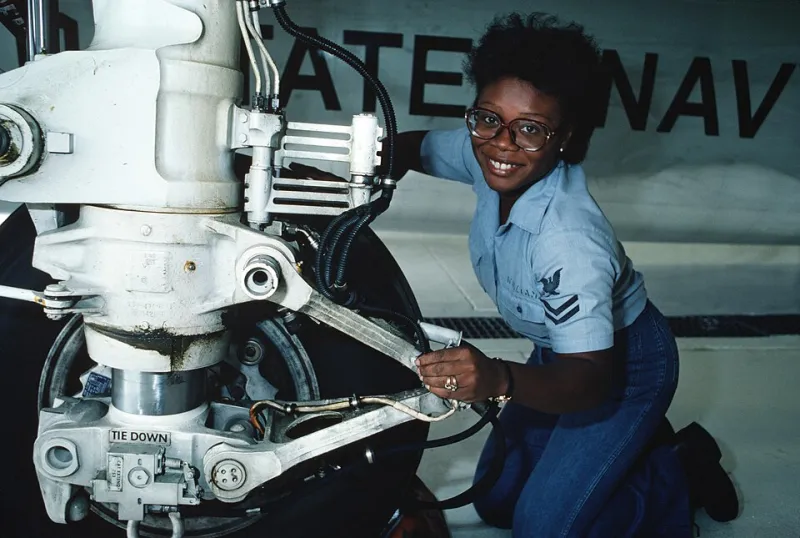
Photo: Department of Defense. American Forces Information Service. Defense Visual Information Center. 1994, Public domain, via Wikimedia Commons
Most drivers have experienced it: a faint squeal as they ease to a stop at a red light, or a brief metallic chirp when backing out of the driveway on a cold morning. The instinct, more often than not, is to turn up the radio. Brake noise has earned an unfair reputation as either a minor annoyance or a dealership tactic to sell unnecessary service. In reality, it is one of the most consistent and informative warning systems on your vehicle — and dismissing it has a documented cost.
At Carshen Garage, we hear the full spectrum of brake sounds every week. What surprises most customers is not that their brakes were failing — it is how precisely the noise they described told us what we would find before we ever lifted the vehicle.
Not All Brake Noise Is Created Equal
The first and most important distinction to understand is that brake noise is not uniform. Different sounds indicate different stages of wear, different components, and different levels of urgency. Treating all brake noise as either "probably nothing" or "definitely an emergency" leads to poor decisions in both directions.
High-pitched squealing during normal stops is the most common sound drivers report, and in many cases, it originates from a deliberately engineered source. Most modern brake pads are manufactured with a small metal wear indicator — a thin strip of hardened steel designed to contact the rotor once the friction material drops below a safe threshold. The resulting squeal is intentional. It is not damage; it is a notification. Think of it as the brake system's version of a low-fuel warning light. At this stage, you have time to schedule service — but not indefinitely.
Intermittent squealing that disappears after the first few stops often has a different cause entirely. Overnight moisture accumulation on rotors is a frequent culprit, particularly in humid climates or after rain. A thin layer of surface rust forms on the rotor face and produces noise until the pads clear it during initial braking. This is generally not a cause for alarm, though it is worth noting that vehicles left parked for extended periods can develop more significant surface oxidation.
A grinding or growling sound under braking is a different matter. This sound typically indicates that the friction material on the brake pad has been fully consumed and metal is now contacting metal — the backing plate pressing directly against the rotor face. At this point, the rotor is being actively damaged with every stop. What began as a pad replacement has now become a pad-and-rotor job, and the cost has risen accordingly. In more severe cases, continued grinding can compromise the caliper as well, escalating the repair further.
A pulsating or rhythmic thudding felt through the brake pedal, often accompanied by vibration in the steering wheel, suggests rotor warping or thickness variation. This is not strictly a noise issue, but it frequently develops alongside audible symptoms. Warped rotors are often the result of prolonged overheating — sometimes from dragging brakes caused by a sticking caliper, sometimes from aggressive driving habits, and sometimes from the simple accumulation of heat stress over time.
What Mechanics Hear That Customers Often Miss
There is a category of brake noise that rarely makes it into the driver's awareness because it occurs under conditions most people are not listening carefully in — specifically, during low-speed turns or while driving over uneven pavement without braking at all.
A clicking or knocking sound when turning at low speed can indicate worn brake hardware: the clips, shims, and anti-rattle components that hold the pad in the caliper bracket. When these parts corrode or lose tension, the pad shifts slightly within its housing. The sound is subtle, but it signals that the brake assembly is no longer operating with the precision it requires. Left unaddressed, loose hardware accelerates uneven pad wear and can contribute to caliper damage.
A scraping sound that occurs while driving — not just while braking — may point to a seized caliper that is holding the pad in partial contact with the rotor at all times. This is a significant concern. A stuck caliper generates sustained heat, degrades brake fluid through thermal cycling, and can cause the rotor to warp or crack. It also creates a drag condition that reduces fuel economy and places asymmetric stress on the vehicle's braking balance.
The Suspension Connection Most Drivers Never Consider
Brake noise does not always originate from the brakes alone. This is a point that surprises many vehicle owners, and it is one of the reasons a competent diagnosis matters more than a quick parts swap.
Worn suspension components — specifically ball joints, control arm bushings, and wheel bearings — can produce sounds during braking that are easily mistaken for brake-related issues. When a vehicle dips forward under braking, it transfers load to the front suspension. If there is play in any of those joints or bearings, that movement creates noise. A driver hears a clunk or groan when stopping and assumes it is the brakes. A technician who inspects only the pads and rotors without evaluating the suspension will miss the actual source of the problem.
The reverse is also true. Alignment and suspension deficiencies can cause brake pads to wear unevenly — more aggressively on one side than the other, or wearing at an angle across the pad face rather than uniformly. When a customer brings in a vehicle because one brake pad wore out significantly faster than the others, that asymmetry is rarely a coincidence. It is almost always telling a story about something upstream: a pulling alignment condition, a stiff caliper slide pin, or a suspension geometry issue that is placing disproportionate load on one corner of the vehicle.
The Real Cost of Waiting
The financial argument for addressing brake noise promptly is straightforward. A brake pad replacement on a typical passenger vehicle in the United States runs between $150 and $300 per axle, parts and labor included. Once the pads wear through completely and rotor damage occurs, that same service typically costs $300 to $500 per axle — sometimes more, depending on the vehicle. Add a damaged caliper, and the figure climbs again. Add suspension components that have been stressed by a compromised braking system, and the repair scope expands into territory that a single service appointment cannot address.
None of these escalations are inevitable. They are the predictable outcome of a decision — usually a series of small decisions — to defer action on a warning that was present and audible.
Listening Is the First Step
Your vehicle communicates through sound in ways that no dashboard light can fully replicate. Brake noise, in particular, carries specific and actionable information about the condition of components that are fundamental to your safety and the safety of everyone else on the road.
The next time you hear something from your brakes — a squeal, a grind, a click, or a pulse through the pedal — resist the instinct to dismiss it. Note when it happens, under what conditions, and whether it is consistent or intermittent. That information, conveyed to a qualified technician, can mean the difference between a minor service and a major repair.
At Carshen Garage, our diagnostic approach begins with listening — both to the vehicle and to the driver. If your brakes are trying to tell you something, we can help you understand what it means before the cost of ignoring it becomes unavoidable.