When the Alternator Is the Problem but the Battery Gets the Bill
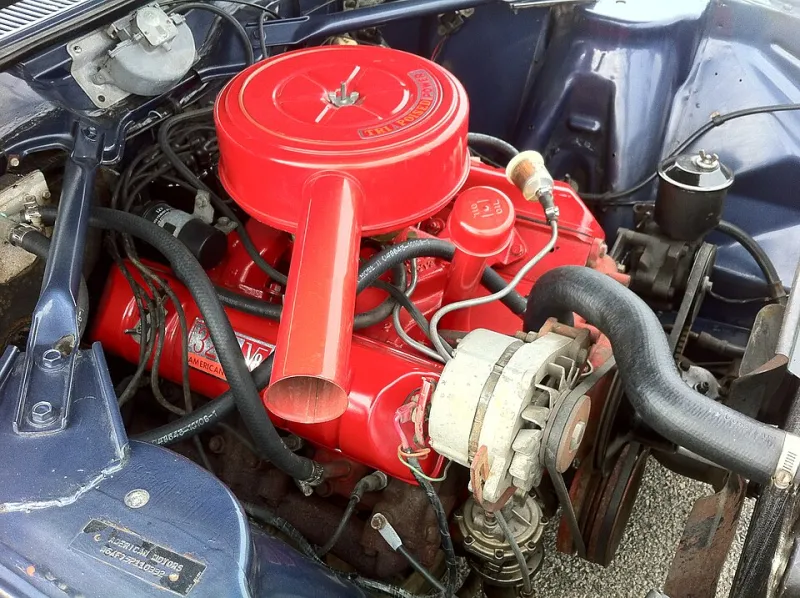
Photo: CZmarlin — Christopher Ziemnowicz, releases all rights but a photo credit would be appreciated if this image is used anywhere other than Wikipedia. Please leave a note at Wikipedia here. Thank you!, CC0, via Wikimedia Commons
The Battery Is the Victim, Not the Cause
There is a familiar sequence that plays out in parking lots and driveways across the country every single day. A driver turns the key, nothing happens, and the immediate conclusion is a dead battery. A jump-start confirms the suspicion. A new battery gets installed, the car runs fine for a few weeks, and then the same thing happens again. The second battery gets returned under warranty. A third one goes in. Eventually, someone mentions the alternator — usually after the repair bill has climbed well past what a single alternator replacement would have cost from the start.
This cycle is not the result of bad luck or inferior parts. It is the predictable consequence of misidentifying the root cause. The battery, in most of these cases, is simply where the failure becomes visible. The alternator is where it actually begins.
What the Alternator Is Actually Doing
Your vehicle's alternator is a generator driven by the serpentine belt. While the engine runs, it produces the alternating current that gets converted to direct current to recharge the battery and power every electrical system in the vehicle — from the ignition and fuel injectors to the climate controls, headlights, and infotainment system.
When the alternator is functioning correctly, the battery's only real job is to start the engine. Once the engine is running, the alternator takes over. A healthy charging system typically maintains voltage between 13.5 and 14.7 volts at the battery terminals. Drop below that range, and the battery is being drawn down rather than replenished. Do that repeatedly, and even a brand-new battery will fail prematurely — not because of a manufacturing defect, but because it was never given the charge it needed to recover.
Why Alternator Failure Rarely Triggers a Warning Light
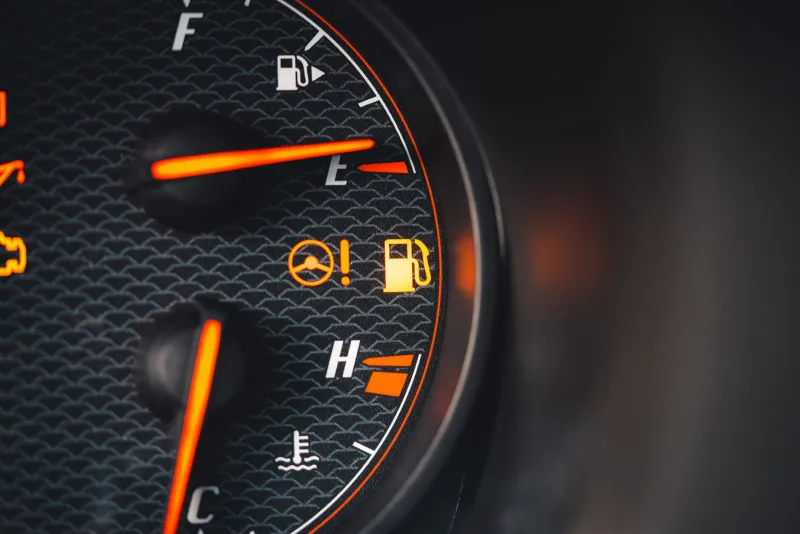
Modern vehicles are equipped with a battery warning light — sometimes shaped like a battery icon, sometimes labeled ALT or GEN depending on the manufacturer. Most drivers assume this light will illuminate when the alternator begins to fail. That assumption is incorrect, and it is one of the primary reasons alternator problems go undetected for so long.
The warning light is tied to voltage thresholds. It typically activates only when system voltage drops below a specific floor — often around 12 volts or lower. An alternator that is producing 12.8 volts instead of the required 14.2 volts is technically underperforming by a significant margin, but that gap is not wide enough to trigger the light. The system reads it as marginal, not critical. The battery slowly depletes over days or weeks, and the driver has no dashboard indication that anything is wrong until the vehicle refuses to start.
Intermittent diode failure within the alternator — one of the more common failure modes — can produce output that fluctuates rather than drops steadily. Some mornings the car starts perfectly. Others, it barely turns over. The inconsistency leads drivers to conclude the battery is the culprit, especially when a voltage test taken on a good day returns a seemingly acceptable reading.
The Electrical Symptoms Most Owners Dismiss
Before a charging system failure becomes a no-start condition, the vehicle typically provides a number of signals that are easy to rationalize away.
Dimming headlights at idle are among the most telling. When the alternator struggles to maintain output at low RPM, the lighting system draws more heavily from the battery. The effect is subtle at first — a slight reduction in brightness when sitting at a red light that resolves when the engine revs. Many drivers attribute this to normal variation or an aging bulb.
Electrical components behaving erratically — power windows moving more slowly than usual, the radio resetting, or the climate control cycling unexpectedly — can all point to voltage instability. So can a battery that seems to discharge faster in cold weather than it did in previous winters. Cold temperatures reduce battery capacity, meaning a marginally charged battery that performed adequately in summer will fail noticeably once temperatures drop.
A whining or grinding noise from the alternator itself, caused by worn bearings or a failing rotor, is another indicator. This is often dismissed as a belt noise or ignored entirely until the car fails to start.
Testing That Tells the Whole Story
A proper diagnosis of a charging system problem requires more than a single voltage reading with a multimeter. Static voltage — measured with the engine off — tells you whether the battery holds a surface charge. It does not tell you whether the alternator is producing adequate output under load.
A load test on the battery itself is the starting point. This measures how the battery performs when current is actually drawn from it, simulating starting conditions. A battery that passes a static test can fail a load test, indicating internal degradation.
Alternator output testing goes further. This measures voltage at the battery terminals with the engine running, then again with the electrical load increased — headlights on, climate control running, rear defroster engaged. A healthy alternator maintains consistent output across these conditions. One that is failing will show a measurable voltage drop as demand increases.
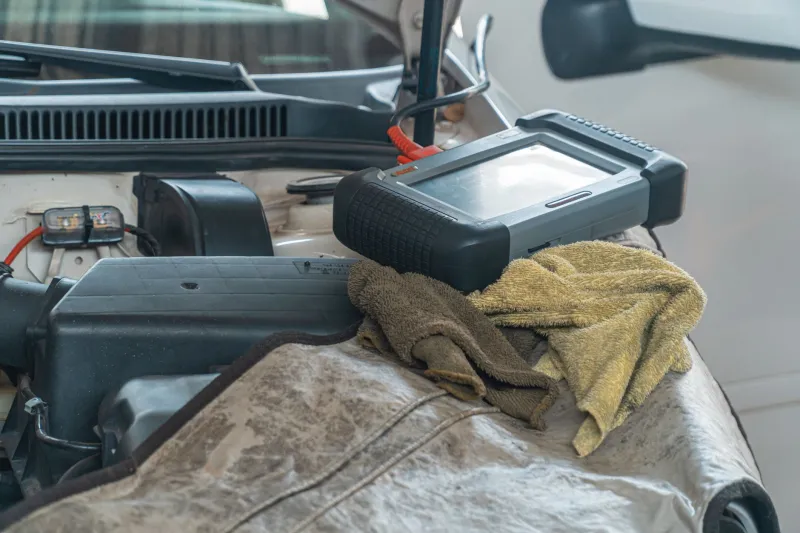
An oscilloscope or advanced scan tool can also detect AC ripple — a pattern of voltage fluctuation caused by failing diodes inside the alternator. This is a level of testing that goes beyond what a simple code reader provides and is one of the reasons a professional diagnostic evaluation is worth the investment before any parts are purchased.
Why Replacing the Battery First Is an Expensive Habit
Automotive retailers have made battery replacement fast, inexpensive, and convenient. Many will test and replace a battery in under twenty minutes with no appointment required. That accessibility is genuinely useful when the battery is the actual problem. When it is not, that convenience becomes a trap.
A new battery installed into a vehicle with a failing alternator will typically last weeks to a few months before it is discharged to the point of failure. The battery may be returned under warranty and replaced at no cost, but the cycle continues. Some drivers go through two or three replacements before a technician identifies the alternator as the source of the problem — by which point the cumulative cost of time, inconvenience, and misfocused repairs has exceeded what a single alternator replacement would have required.
The charging system functions as an integrated unit. Testing both components together, rather than treating them as separate problems, is the only approach that reliably identifies which one is responsible.
What a Complete Charging System Evaluation Looks Like
At Carshен Garage, a charging system evaluation covers both ends of the circuit. The battery is load-tested to confirm its actual capacity, not just its resting voltage. Alternator output is measured at idle and under electrical load. Wiring connections and ground points are inspected for corrosion or looseness, both of which can mimic alternator failure by introducing resistance into the circuit. Belt condition and tension are verified, since a slipping belt reduces alternator speed and output without affecting the alternator itself.
The goal is not simply to identify which part failed. It is to understand why it failed and whether any other component in the system contributed. Replacing an alternator without addressing a corroded ground cable or an overtaxed battery produces a repair that may not hold.
The Right Diagnosis Before the First Part Is Ordered
A dead battery is a concrete, tangible problem. It is easy to point to and easy to replace. An underperforming alternator is abstract — it produces power, just not enough — and that ambiguity makes it easy to overlook.
The next time a vehicle refuses to start, the most important question is not which part needs to be replaced. It is which part is actually responsible. Getting that answer first, through proper testing rather than assumption, is what separates a permanent fix from an expensive series of temporary ones.