When the Scanner Stops Short: What Diagnostic Reports Leave Out and Why It Matters
There is something reassuring about a printed diagnostic report. It arrives with timestamps, module identifiers, and alphanumeric fault codes that project a sense of completeness. For many drivers, handing over a vehicle and receiving back a document filled with technical data feels like the full picture has been captured.
It has not.
Modern vehicles are sophisticated enough to generate thousands of data points across dozens of electronic control modules. What a standard shop scanner retrieves — and what it displays on a report — represents a fraction of that total output. Understanding the gap between what your vehicle knows and what your diagnostic printout shows is not a minor technical footnote. It is, in many cases, the difference between a problem being caught and a problem being missed entirely.
What a Diagnostic Scan Actually Does
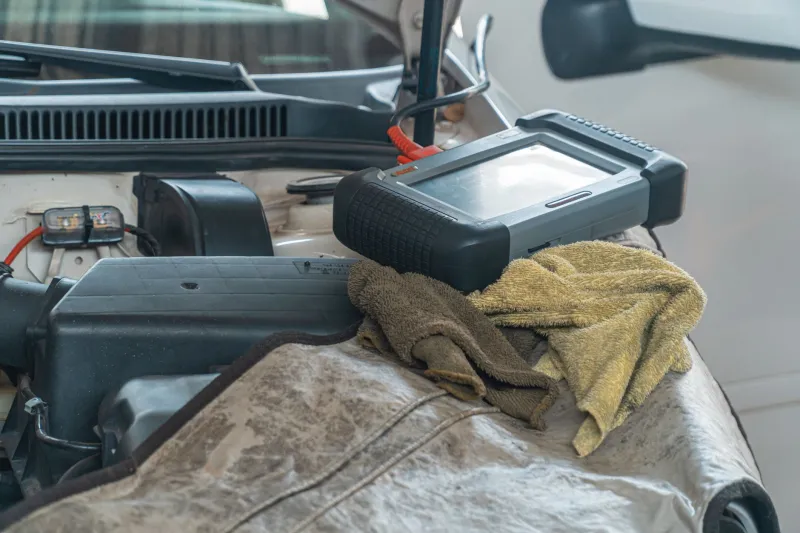
When a technician connects a scan tool to your vehicle's OBD-II port, the tool initiates a conversation with the vehicle's network of control modules. Depending on the tool's capability and the technician's process, it may query the engine control module, the transmission control module, the anti-lock braking system, the airbag control unit, and a range of body and convenience modules.
Each module stores data — current values, historical readings, and fault codes that indicate when a parameter fell outside its programmed threshold. Fault codes, commonly called DTCs (Diagnostic Trouble Codes), are the most visible output. They are what most printed reports emphasize, and they are what most drivers focus on when reviewing the results.
But DTCs only activate when a measured value crosses a defined boundary. They are, by design, reactive. A sensor that is drifting toward failure but has not yet breached its threshold will not generate a code. A component behaving erratically under specific load conditions — conditions that were not present during the scan — will appear perfectly normal in the data. The scanner captures a snapshot. It does not capture a story.
The Data That Never Makes the Report
Beyond fault codes, modern scan tools can access live data streams — real-time readings from sensors throughout the vehicle. Fuel trim values, oxygen sensor voltage waveforms, throttle position curves, and coolant temperature progressions are among the parameters that can reveal developing problems long before a DTC appears.
The challenge is that reviewing live data meaningfully requires time, expertise, and intentional methodology. A technician who connects a scanner, retrieves stored codes, clears them, and hands back a report has completed a process — but not necessarily a diagnosis. Live data analysis, by contrast, involves running the vehicle through specific operating conditions, monitoring parameter behavior, and interpreting what deviations from expected values actually mean.
Many shops, particularly high-volume service centers operating under time pressure, do not perform this deeper layer of analysis as a standard step. The equipment may be capable of it. The workflow, however, may not support it.
Additionally, not all scan tools communicate equally with all vehicles. Factory-level diagnostic software — the same platforms used by dealership technicians — accesses proprietary data channels that generic aftermarket tools cannot reach. A shop using a mid-tier aftermarket scanner on a European import, a newer domestic truck, or a hybrid powertrain may be working with incomplete module coverage without the driver ever knowing it.
What Experienced Technicians Find That Scanners Miss
This is where the human element becomes irreplaceable.
An experienced mechanic approaches a diagnostic situation with a body of knowledge that no automated system can fully replicate. Pattern recognition built from years of working on specific platforms allows a skilled technician to recognize the early signs of a failing component before it has declared itself in the data. A subtle vibration felt during a test drive. A fuel smell that is faint but present. A noise that appears only when the air conditioning compressor engages. None of these observations show up in a printout.
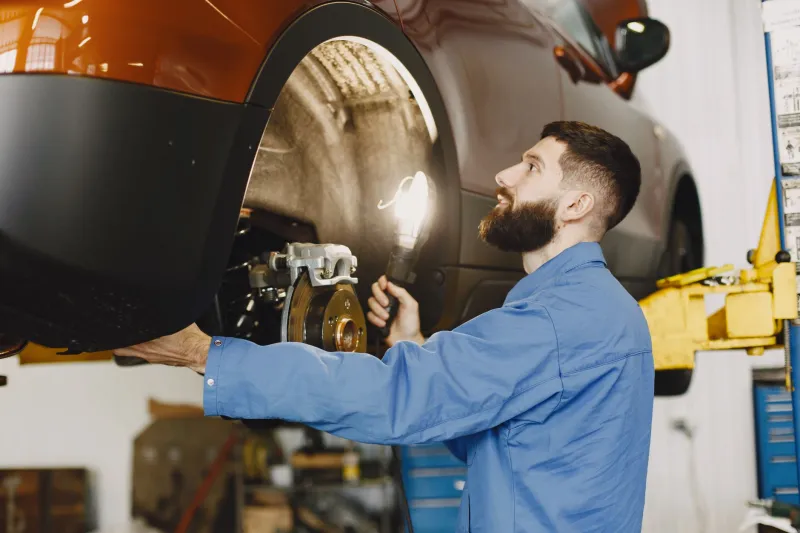
Physical inspection — hands on components, eyes under the vehicle, attention to fluid condition and color — remains a diagnostic method that scanner data cannot replace. A cracked vacuum line, a heat-damaged wiring harness, or a deteriorating motor mount will not throw a fault code in its early stages. A thorough technician will find it anyway.
This is not a criticism of diagnostic technology. Scan tools are powerful instruments that have genuinely transformed automotive repair. The point is that technology and expertise function best together, not as substitutes for one another.
When to Ask for More Than the Printout
As a vehicle owner, there are specific circumstances where accepting a scan report at face value carries real risk.
If your vehicle is exhibiting a symptom — a noise, a hesitation, a smell, an unusual driving characteristic — and the diagnostic report comes back clean or shows only minor codes unrelated to your concern, that is not a resolution. A clean scan in the presence of an active symptom means the cause has not yet been identified, not that it does not exist.
Similarly, if a repair is recommended based solely on a fault code without supporting evidence from live data analysis or physical inspection, it is reasonable to ask how the diagnosis was confirmed. Replacing a part because a code pointed in its general direction, without verifying that the part is actually the source of the fault, is a common and costly shortcut.
In these situations, requesting a second opinion from a shop that performs comprehensive diagnostics — including live data review and a physical inspection — is not an overreaction. It is sound practice.
The Value of Knowing What You Are Looking At
A diagnostic report is a starting point, not a conclusion. The most useful thing it can do is direct an experienced technician toward the right area of investigation. What happens after that — the questions asked, the tests performed, the observations made — determines whether the actual problem gets found.
At Carshen Garage, diagnostics are treated as a process rather than a transaction. Connecting a scanner is the beginning of that process. Understanding what the data means, recognizing what it cannot tell you, and applying genuine mechanical expertise to fill in the gaps — that is what separates a diagnostic from a guessing game.
Your vehicle communicates continuously. Making sure someone is actually listening to all of it is worth asking about.