The Undercarriage War: How Your Zip Code Determines Your Vehicle's Biggest Corrosion Threat
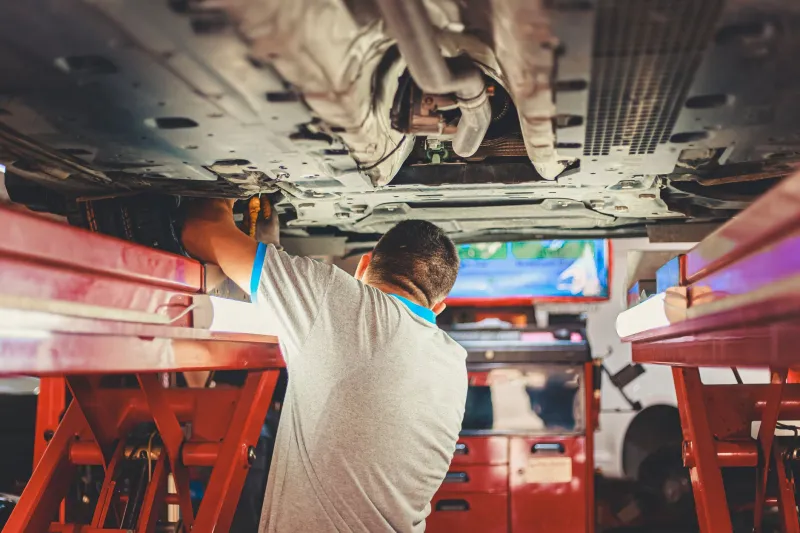
Corrosion is not a uniform threat. The oxidation quietly consuming the brake lines of a Minnesota commuter vehicle operates through an entirely different mechanism than the salt-air degradation attacking the suspension components of a coastal Georgia truck. Yet most generic maintenance advice treats rust prevention as a single-solution problem — apply an undercoating, wash the car occasionally, and consider the matter handled.
The reality is considerably more nuanced, and the consequences of misunderstanding your regional risk profile can be severe. Structural rust, corroded brake lines, and seized suspension components are not cosmetic concerns. They are mechanical failures waiting to occur. Understanding the specific threat your climate poses is the first step toward an effective defense.
Why Geography Is a Mechanical Variable
Vehicle corrosion is driven by electrochemical reactions that require moisture, oxygen, and — critically — an electrolyte to accelerate the process. In the absence of electrolytes, bare steel oxidizes slowly. Introduce road salt, ocean air, or even certain mineral-laden groundwater splashing onto undercarriage components, and the rate of oxidation accelerates dramatically. Different US regions deliver different combinations of these accelerants, which is why the same vehicle model can show vastly different undercarriage conditions after five years depending entirely on where it was driven.
The Rust Belt and Upper Midwest: Road Salt as a Year-Round Threat
States including Ohio, Michigan, Pennsylvania, New York, Wisconsin, Minnesota, and Illinois represent the most aggressive corrosion environment in the continental United States. The culprit is well known: road salt. Municipalities in these states apply millions of tons of sodium chloride and calcium chloride to roadways each winter, and those salts do not simply wash away. They accumulate in wheel wells, along frame rails, around suspension mounting points, and inside body seams.
Calcium chloride — increasingly common because it remains effective at lower temperatures than sodium chloride — is particularly aggressive. It retains moisture even after the road surface appears dry, maintaining a corrosive environment long after a storm has passed.
For drivers in this region, the standard recommendation of an annual undercoating is insufficient. The most effective approach involves:
- Thorough high-pressure undercarriage washing after every significant salt event, not just at the end of winter
- Application of a penetrating oil-based corrosion inhibitor — such as fluid film or similar products — to exposed metal surfaces before winter begins
- Inspection of factory rubber plugs in floor pans and frame rails, replacing any that are missing or degraded to prevent salt-laden water from pooling inside hollow structural sections
- Annual inspection of brake lines, particularly at frame clips and routing brackets where moisture collects and oxygen flow is restricted — exactly the conditions that accelerate line perforation
The frame rails and subframe mounting points of vehicles in this region deserve particular attention. Structural rust in these areas does not merely affect aesthetics; it affects the vehicle's ability to protect occupants in a collision.
The Northeast Coastal Corridor: Salt Air Compounds the Road Salt Problem
Vehicles operated in coastal areas from Maine through New Jersey face a compounded threat. Road salt remains a significant factor during winter months, but the persistent presence of airborne marine salt — carried inland by prevailing winds — means corrosion continues year-round. Humidity levels in this region are also elevated relative to the interior of the country, providing the moisture component of the corrosion equation even during dry weather.
Brake calipers and rotors in this environment are particularly susceptible to surface rust between uses. While light surface rust on rotors is normal and clears with the first stop, persistent rust buildup on caliper brackets and slide pins causes binding, uneven pad wear, and premature component failure. Quarterly caliper inspection and lubrication of slide pins is a maintenance step that many Northeast drivers overlook until a caliper seizes.
For vehicles parked near the ocean — within roughly two miles of tidal water — the frequency of undercarriage washing should increase to monthly during high-humidity seasons.
The Southeast and Gulf Coast: Humidity, Heat, and Hidden Degradation
The corrosion profile in states like Florida, Louisiana, Alabama, Mississippi, and coastal Georgia is distinct from the northern pattern. Road salt is rarely a factor, but the combination of high ambient humidity, elevated temperatures, and proximity to saltwater creates a persistent oxidation environment that attacks different components than those most at risk in northern climates.
Electrical connectors and grounding points are a primary concern in this region. Heat accelerates the degradation of connector seals, and high humidity allows moisture to penetrate connections that would remain sealed in drier climates. Corroded ground connections produce some of the most difficult-to-diagnose electrical faults a technician encounters — intermittent sensor failures, erratic gauge readings, and ABS or stability control malfunctions that appear unrelated to anything physical.
Exhaust system components also degrade more rapidly in high-humidity environments. The combination of internal condensation from combustion byproducts and external atmospheric moisture accelerates perforation of mufflers, resonators, and pipe joints.
Practical priorities for Southeast drivers include:
- Annual inspection of all visible electrical grounding straps and engine bay ground points
- Dielectric grease application to trailer connectors, battery terminals, and sensor connectors during routine service
- More frequent exhaust system inspection, particularly at joints and hangers where moisture accumulates
The Mountain West and High Desert: Alkaline Dust and Thermal Cycling
Drivers in states such as Arizona, Nevada, Utah, New Mexico, and parts of Colorado face a different and often underappreciated corrosion challenge. Road salt is uncommon at lower elevations, and humidity is low. The primary threats here are alkaline dust — which, when combined with any moisture, creates a mildly caustic surface deposit — and extreme thermal cycling.
Vehicles in the desert Southwest experience temperature swings that can exceed 60 degrees Fahrenheit between morning and afternoon. This cycling causes metal components to expand and contract repeatedly, stressing protective coatings and accelerating the degradation of rubber seals, CV axle boots, and suspension bushings. Once a CV boot cracks and expels its grease, the joint it protects fails rapidly — often within months in the gritty, dusty conditions of this region.
Off-road and high-clearance vehicles operated on unpaved roads face accelerated abrasion of factory undercoating, exposing bare metal to alkaline dust accumulation. For these drivers, periodic reapplication of rubberized undercoating to abraded areas is a practical and cost-effective protective measure.
The Pacific Northwest: Wet, Mild, and Persistently Corrosive
Western Washington, Oregon, and Northern California present a corrosion environment characterized by persistent moisture rather than temperature extremes. Vehicles in Seattle, Portland, and similar cities rarely freeze, but they are exposed to rainfall for eight or more months of the year. This sustained moisture exposure, combined with road grime and organic debris that accumulates in body seams and underbody crevices, creates ideal conditions for slow but continuous oxidation.
Drainage channels and body seam sealant are particular concerns in this region. Factory seam sealer degrades over time, allowing moisture to penetrate between overlapping body panels. By the time surface rust becomes visible, significant corrosion has typically already developed beneath the paint. Annual inspection of seam sealant condition — and reapplication where cracking or separation is observed — significantly extends the service life of body panels.
Building Your Regional Maintenance Protocol
Effective corrosion prevention is not a single product or a single service. It is a protocol calibrated to the specific chemical and climatic conditions your vehicle operates in. The components most at risk, the frequency of preventive treatment, and the inspection priorities all shift based on geography.
At Carshen Garage, undercarriage and corrosion assessments are conducted with regional context in mind. A vehicle with significant prior exposure to Rust Belt winters requires a different evaluation than one that has spent its life in the dry Southwest. Knowing where a vehicle has been — and where it will be operated going forward — shapes the maintenance recommendations that genuinely protect it.
Rust does not announce itself. It works quietly, in wheel wells and under frame rails, in the spaces between panels and along the routing of brake lines. The most effective time to address it is before it has established itself — and that window is always shorter than it appears.