A Comfortable Ride Is Not a Safe One: What Your Suspension System Is Hiding

The suspension system on a modern American vehicle is, in a very real sense, a victim of its own success. Engineers have become extraordinarily skilled at isolating passengers from road imperfections, absorbing vibration, and delivering a ride that feels planted and composed even as critical components quietly wear. The result is a system that can fail incrementally — and expensively — without ever triggering an obvious alarm.
This is the central diagnostic challenge: drivers calibrate their sense of "normal" to a vehicle that has been gradually degrading. By the time the ride feels genuinely poor, the suspension has often already compromised tire wear, braking performance, steering precision, and the structural integrity of adjacent components.
Understanding What the Suspension Actually Does
Before examining failure patterns, it is worth establishing what a healthy suspension system is responsible for. Its role extends well beyond ride comfort. The suspension maintains consistent tire contact with the road surface, which is the foundational requirement for steering, braking, and acceleration. It manages the transfer of weight during cornering and emergency maneuvers. It protects every other mechanical component on the vehicle from the constant stress of road impact.
Shocks and struts — the components most commonly associated with ride quality — are hydraulic devices that control the rate at which suspension springs compress and rebound. When they wear, they do not simply make the ride rougher. They allow the tire to bounce and lose contact with the road surface at precisely the moments when contact matters most: during hard braking, sudden lane changes, and emergency avoidance maneuvers.
NIST and NHTSA research has consistently linked degraded shock absorber performance to increased stopping distances. A vehicle with worn shocks can require significantly longer distances to stop from highway speeds — a margin that, in real-world emergency situations, is the difference between a near miss and a collision.
The Incremental Degradation Problem
Shocks and struts typically lose performance gradually over tens of thousands of miles. There is no sudden failure event, no warning light, and often no dramatic change in ride quality — particularly in vehicles equipped with sophisticated multi-link suspension designs or electronically adaptive dampers.
This gradual degradation is precisely what makes suspension wear so difficult for drivers to self-diagnose. A vehicle that has lost thirty percent of its shock absorber effectiveness still feels largely normal to someone who drives it every day. The standard of comparison has shifted alongside the deterioration.
Professional diagnostic evaluation provides an objective baseline. Technicians use specialized equipment to measure actual damper performance against manufacturer specifications, removing the subjective element from the assessment entirely.
Warning Signs That Demand Attention
While suspension wear can be subtle, it does produce observable symptoms — if drivers know what to look for.
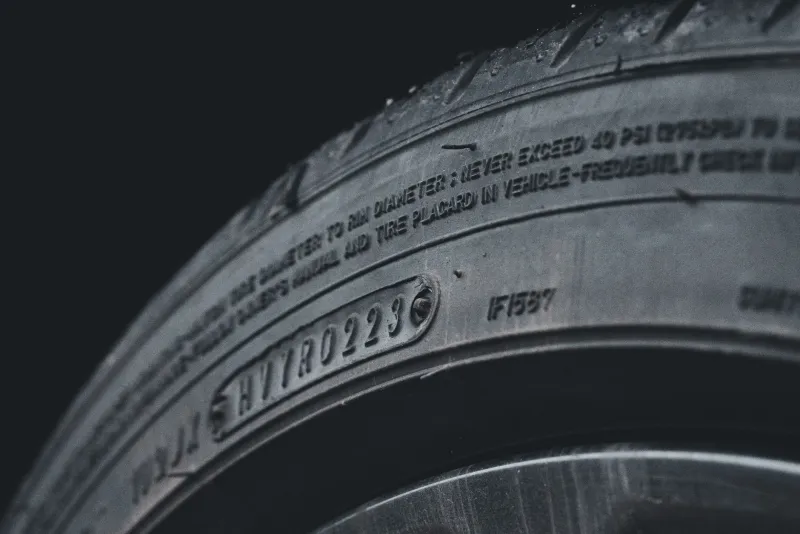
Uneven or accelerated tire wear is one of the most reliable indicators of suspension problems. When shocks or struts cannot maintain consistent tire contact with the road, the tire develops scalloped or cupped wear patterns — a distinctive wavy appearance across the tread face. This pattern does not develop from alignment issues alone and should prompt a thorough suspension inspection.
Vehicle nose-dive under braking indicates that front shock absorbers or struts have lost their ability to control weight transfer. A well-maintained vehicle brakes in a relatively controlled, level manner. Excessive nose-dive places additional stress on front-end components and lengthens stopping distances.
Body roll during cornering beyond what feels proportionate to speed suggests that the suspension is no longer effectively managing lateral weight transfer. This is not merely a comfort issue — it directly affects the vehicle's handling limit in emergency situations.
Steering wheel vibration or wandering at highway speeds can indicate worn tie rod ends, ball joints, or control arm bushings — all components within the broader suspension and steering system that wear in conjunction with shocks and struts.
Clunking, knocking, or squeaking sounds over bumps or during low-speed maneuvers often point to worn bushings, loose end links, or failing ball joints. These sounds are the suspension's most direct form of communication and should never be normalized or dismissed.
The Compounding Cost of Neglect
What makes suspension neglect particularly expensive is its tendency to accelerate wear in adjacent systems. Worn shocks and struts place additional stress on ball joints, tie rod ends, and control arm bushings — components that are designed to operate within a system functioning as intended. When that system is compromised, these parts wear faster and fail sooner.
Tire wear is among the most immediate financial consequences. A set of quality all-season tires that should deliver fifty thousand miles of service may be ruined in twenty thousand miles by a suspension system that cannot maintain proper contact geometry. The cost of two additional sets of tires over the vehicle's life dwarfs the cost of timely suspension service.
Braking system components also suffer. When suspension geometry is compromised, brake pads and rotors may wear unevenly, reducing braking effectiveness and shortening service life. Wheel bearing wear accelerates when alignment and suspension components are no longer holding the wheel in its correct position.
The arithmetic of deferred maintenance almost always favors early intervention.
What a Proper Suspension Inspection Covers
A thorough suspension evaluation is not a visual check from the side of the vehicle. It requires the vehicle to be raised on a lift so that technicians can physically assess the condition of individual components under load and at rest.
At Carshen Garage, suspension inspections evaluate shock absorber and strut condition, ball joint play, tie rod end integrity, control arm bushing condition, sway bar end links, and overall suspension geometry. Each component is assessed individually, and findings are communicated clearly so that vehicle owners can make informed decisions about repair priorities.
Not every worn component requires immediate replacement. Understanding which items are approaching the end of their service life — versus which represent an active safety concern — allows for intelligent planning rather than reactive emergency repairs.
The Diagnostic Advantage
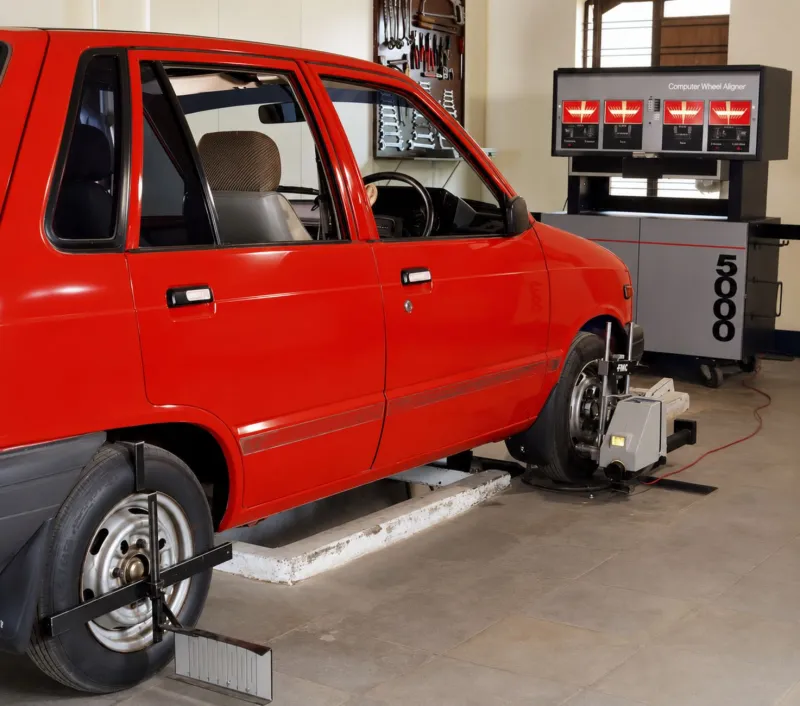
Modern alignment equipment provides a secondary diagnostic window into suspension health. When a vehicle that has recently received an alignment returns with alignment angles that have shifted, it often indicates that a worn component is no longer holding the adjustment. This pattern is a reliable flag for deeper suspension investigation.
Electronic vehicle health monitoring, where available, can also flag suspension-related anomalies — though these systems are designed to detect active faults rather than gradual wear. They complement, but do not replace, periodic hands-on inspection.
The suspension system is the foundation upon which every other dynamic system on your vehicle depends. A smooth ride is not evidence of a healthy one. It is, just as often, evidence of how effectively a deteriorating system can disguise its own decline.