How You Drive Is Killing Your Battery Long Before Its Time
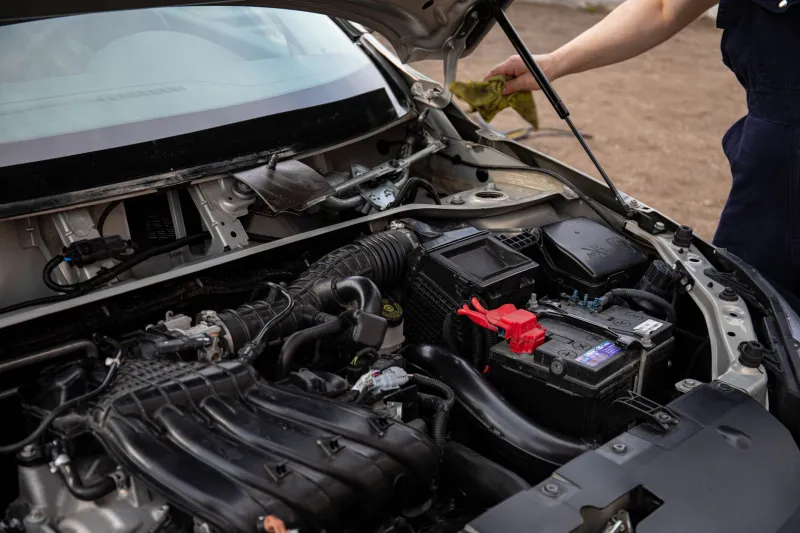
There is a persistent assumption in American car ownership: batteries last three to five years, then you replace them. It is a tidy, calendar-based rule that feels reliable. The problem is that it is largely fiction. The actual lifespan of a car battery has far less to do with how many years it has been installed and far more to do with how — and where — you drive.
At Carshen Garage, we see this pattern repeatedly. A two-year-old battery fails in August. A six-year-old battery in a weekend driver's sedan tests perfectly healthy. The difference is almost never the date on the receipt.
The Short-Trip Problem Nobody Talks About
If your daily commute is under fifteen minutes each way, your charging system may never fully restore what your battery expends during startup. Modern vehicles draw a significant surge of power to fire the engine, and it takes sustained driving — typically twenty to thirty minutes at highway speeds — to replenish that charge through the alternator.
Urban drivers who make multiple short stops throughout the day are particularly vulnerable. Each cold start depletes the battery; each abbreviated drive fails to fully recharge it. Over weeks and months, the battery operates in a state of chronic partial discharge. Lead-acid chemistry does not tolerate this pattern graciously. Sulfation — the crystallization of lead sulfate on battery plates — accelerates under these conditions, permanently reducing capacity well ahead of schedule.
This is not a minor inconvenience. A battery operating at sixty or seventy percent of its rated capacity may still start the car on a mild October morning. That same battery, faced with a January cold snap in Minnesota or a scorching Phoenix parking lot in July, may simply refuse.
Temperature Is a Multiplier, Not Just a Variable
Extreme heat is actually harder on batteries than extreme cold, though cold weather tends to get the blame because that is when failures become most visible. High temperatures accelerate internal chemical reactions, increasing the rate of water loss from battery fluid and speeding up plate corrosion. A battery that has spent three summers in a Phoenix, Dallas, or Atlanta driveway has endured far more degradation than its age suggests.
Cold weather, meanwhile, thickens engine oil and increases the cranking resistance the battery must overcome — all while temporarily reducing the battery's own output capacity. A battery that is already weakened from heat damage or chronic undercharging may simply lack the reserve to handle a cold start when temperatures drop below freezing.
The practical implication: drivers in climates with severe seasonal swings should treat battery testing as a regular maintenance item, not an afterthought.
Parasitic Drain: The Invisible Thief
Every modern vehicle has systems that draw power even when the ignition is off. Alarm systems, keyless entry modules, infotainment memory, and telematics units all pull small but continuous currents from the battery. Under normal circumstances, this parasitic draw is minimal and manageable. Under abnormal circumstances, it becomes a serious problem.
A malfunctioning module, an improperly installed aftermarket accessory, or even a faulty door switch that leaves an interior light on can drain a battery to dangerous levels overnight. Drivers who leave their vehicles parked for extended periods — a week at an airport lot, a month at a seasonal home — return to find a battery that has been silently exhausted.
What makes parasitic drain particularly insidious is that it often does not trigger a warning light. The vehicle simply fails to start, and the battery takes the blame for what is actually an electrical fault elsewhere in the system.
Reading the Signs Before You Are Stranded
A failing battery rarely fails without warning. The signals are there; most drivers simply do not know what to look for.
Slow or labored cranking is among the earliest indicators. If the engine turns over more sluggishly than usual — especially on a mild-temperature morning when cold is not a factor — the battery's capacity to deliver peak current is diminishing.
Dimming headlights at idle suggest the battery is struggling to maintain voltage when the alternator's contribution is lowest. Lights that brighten noticeably when you rev the engine confirm the battery is not holding charge effectively on its own.
Frequent need to jump-start, even after a full day of driving, points to either a battery that can no longer hold a charge or a charging system that is not replenishing it properly. Both demand professional diagnosis, not just a battery swap.
Age combined with symptoms is the most reliable indicator. A battery that is three years old and exhibiting any of the above behaviors in a hot-climate state warrants immediate load testing. A battery that is five years old anywhere in the country should be proactively tested, regardless of apparent performance.
What a Proper Battery Test Actually Tells You
A simple voltage reading is not a battery test. A battery sitting at 12.6 volts can still fail catastrophically under the load of a cold start. A proper load test — or better yet, a conductance test using modern diagnostic equipment — evaluates the battery's ability to deliver current under simulated demand. This is the only meaningful assessment of real-world capacity.
At Carshen Garage, battery diagnostics include evaluating the charging system as a whole. An alternator that is undercharging, overcharging, or intermittently failing will destroy a new battery just as efficiently as it destroyed the old one. Replacing the battery without verifying the charging system's health is an incomplete repair.
The Preventive Approach
For drivers with primarily short urban commutes, a battery maintainer or trickle charger used periodically can offset the chronic undercharging problem. These devices are inexpensive, widely available, and genuinely extend battery life when used consistently.
For vehicles parked for extended periods, a quality battery tender — not a simple trickle charger — will maintain optimal charge without overcharging. This is particularly relevant for seasonal vehicles, RVs, and motorcycles.
Regular professional testing, ideally at each oil change interval, provides the earliest possible warning of degradation. Catching a battery at seventy percent capacity costs nothing but a few minutes of diagnostic time. Catching it at zero percent costs a tow, a missed appointment, and sometimes a day's work.
Your battery's age is a data point, not a verdict. How you drive, where you live, and how well your electrical system functions are the factors that actually determine when it fails. Understanding those variables puts you in control of the outcome.