The Ride Quality Lie: Why Your Car's Handling 'Feels Fine' Right Up Until It Doesn't
There is a well-documented phenomenon in human perception called adaptation. When change occurs gradually enough, the brain recalibrates its baseline and stops registering the shift as abnormal. It is the reason you stop noticing a slow leak in your home, the reason a gradual weight gain goes unnoticed until photographs surface from two years ago.
It is also the reason most American drivers have no idea their suspension is failing.
Shocks and struts do not typically fail the way a tire blows out or a belt snaps. They wear incrementally across tens of thousands of miles. Each month, each pothole, each highway mile moves the degradation curve a fraction further. The driver adjusts their expectations accordingly. The car still gets them to work. It still parks. It still passes an inspection in states that do not test suspension components. And so the decline continues, unaddressed, while a cascade of secondary damage quietly accumulates beneath the vehicle.
Understanding What Shocks and Struts Actually Do
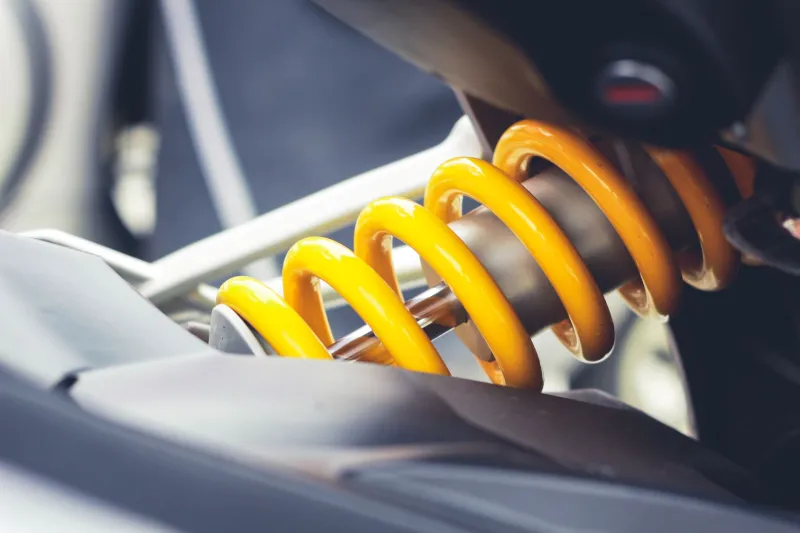
The terms are often used interchangeably in casual conversation, but shocks and struts serve the same fundamental purpose through slightly different designs. Both are hydraulic damping devices that control the movement of your vehicle's springs. Without them, your car would behave like a boat — absorbing a bump and then continuing to oscillate up and down until friction eventually brought the motion to a stop.
Struts are structural components. They are part of the suspension geometry itself, meaning they bear vehicle weight and contribute directly to wheel alignment. Replacing them requires realigning the vehicle afterward. Shocks are non-structural dampers — they control motion without bearing load — but their failure produces equally serious consequences for vehicle dynamics.
Either way, when these components lose their ability to control spring movement, the entire contact relationship between your tires and the road surface is compromised.
The Diagnostic Challenge: Symptoms That Masquerade as Normal
Because suspension wear is gradual, its symptoms tend to be dismissed as vehicle personality rather than mechanical failure. This is where driver education matters enormously.
Nose dive under braking: When you apply the brakes firmly, a vehicle with worn front shocks or struts will pitch forward noticeably — the front drops, the rear rises. This is not just uncomfortable; it is a measurable reduction in braking performance. Studies cited in automotive engineering literature have shown that worn dampers can increase stopping distances by 20 percent or more under hard braking. On a highway at 65 mph, that translates to a meaningful number of additional feet between you and the vehicle ahead.
Body roll in corners: A vehicle that leans excessively through turns — even moderate highway on-ramps — is demonstrating inadequate damping control. Drivers often attribute this to the vehicle's size or weight rather than suspension condition. It is worth noting that this lateral body movement also affects the steering geometry, reducing the precision of driver inputs at exactly the moment precision matters most.
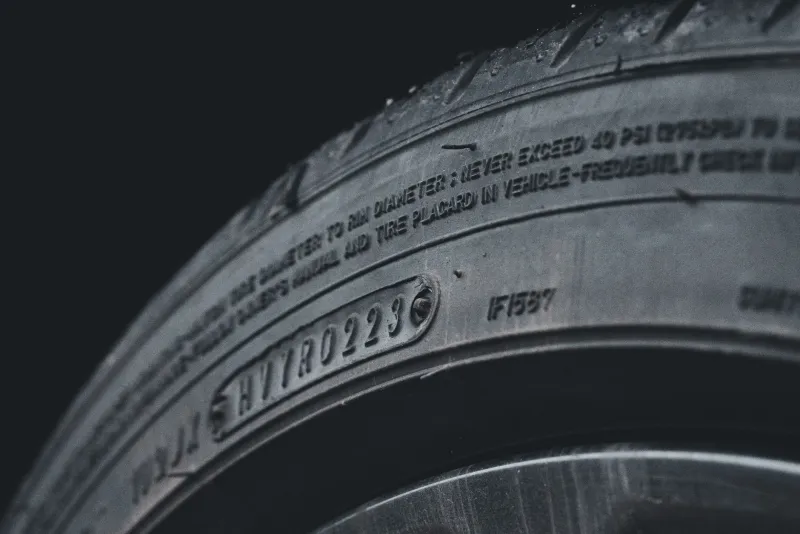
Cupped or scalloped tire wear: This is one of the most reliable diagnostic indicators of shock and strut wear, and one of the most commonly misread. Cupped tires display a pattern of uneven wear — high and low spots that repeat around the circumference — caused by the tire bouncing against the road rather than maintaining consistent contact. Many drivers have tires replaced without ever addressing the suspension that caused the wear pattern, guaranteeing a repeat of the same damage on the new set.
Steering wander: A vehicle that requires continuous small corrections to maintain a straight line on a flat road — or that feels vague and disconnected from driver input — may be experiencing the alignment instability that accompanies strut wear. Because struts are part of the suspension geometry, their internal wear affects caster and camber angles in ways that cannot be fully corrected through a wheel alignment service alone.
Vehicle bounce after a dip: A simple field test: drive slowly over a speed bump or dip in the road and observe how many times the vehicle oscillates before settling. A properly damped vehicle settles in one controlled movement. A vehicle with worn dampers will bounce two, three, or more times. This test is not definitive, but it is a useful first indicator that warrants professional evaluation.
The Compounding Damage Problem
What makes suspension neglect particularly costly is that worn shocks and struts do not simply affect ride comfort in isolation. They initiate a chain of secondary damage that affects other systems simultaneously.
Tire wear is the most immediate casualty. The cupping pattern described above develops relatively quickly on worn suspension — often within 10,000 to 15,000 miles on a new set of tires. Given that a quality set of mid-range tires for a typical sedan or crossover runs $600 to $900 installed, replacing tires prematurely because of unaddressed suspension wear is a significant and entirely avoidable expense.
Ball joints, tie rod ends, and control arm bushings all experience elevated stress when shocks and struts can no longer properly control suspension movement. The forces that a functional damper absorbs must go somewhere when the damper is compromised — and they go into the adjacent components. A vehicle that needed $700 in shock and strut replacement may ultimately require $1,400 in total suspension work if the secondary components are allowed to absorb that stress long enough.
Brake system components also bear a secondary cost. Rotors and pads wear unevenly when vehicle weight transfer during braking is not properly managed. This is a less intuitive connection, but it is a real one that any experienced technician will recognize.
When to Have Suspension Evaluated Professionally
The general industry guideline suggests having shocks and struts inspected at 50,000 miles and seriously evaluated for replacement between 75,000 and 100,000 miles on most vehicles. However, these are averages. Driving environment matters considerably.
A vehicle driven primarily on Chicago's pothole-laden streets or rural roads in the rural South — where road surface quality varies dramatically — will reach the end of its damper service life faster than the same vehicle driven on smooth suburban highways in Southern California. Payload also matters; a half-ton pickup used for regular hauling places substantially more stress on its dampers than one used for light commuting.
Beyond mileage triggers, any of the symptoms described above should prompt a suspension inspection rather than a wait-and-see approach. The diagnostic process at a qualified shop involves a physical inspection of the dampers for leaking hydraulic fluid (a definitive sign of failure), a bounce test, a check of the rubber mounts and bump stops, and an evaluation of the associated components for wear.
The Safety Framing That Gets Overlooked
Suspension work is frequently framed as a comfort issue — smoother ride, less noise, better handling feel. That framing undersells the actual stakes. The ability to maintain vehicle control in an emergency maneuver, to stop within a predictable distance, and to hold a lane during a sudden lane change are all directly influenced by suspension condition.
The National Highway Traffic Safety Administration's data on vehicle crash contributing factors consistently identifies vehicle handling and control as relevant in a meaningful percentage of crashes. Suspension condition is one of the variables that determines whether a vehicle responds to driver input when it matters most.
At Carshen Garage, suspension diagnostics are treated as a safety evaluation, not merely a comfort upgrade. The distinction matters. A driver who understands that worn struts are extending their braking distance and reducing their emergency handling response is a driver who makes a different decision than one who simply thinks their ride could feel smoother.
The vehicle that feels fine today may be one hard stop or one sharp evasive maneuver away from revealing what gradual adaptation has been hiding. That is the ride quality lie — and recognizing it early is both a financial decision and a safety one.