What Dealers Sell as Protection and What Actually Stops Rust: The Undercoating Reality Check
The Sales Pitch You've Heard Before
Walk into nearly any new car dealership in the United States and, somewhere between the financing paperwork and the extended warranty pitch, a service manager will present you with a protection package. Undercoating — sometimes labeled rustproofing, corrosion protection, or underbody sealant — sits prominently on that menu, often priced between $200 and $1,000 depending on the dealership and the vehicle. The language used is confident, almost clinical: sealed against the elements, lifetime protection, factory-grade barrier.
What that language rarely includes is context. And context, as it turns out, is everything when it comes to whether undercoating is a legitimate investment or an expensive exercise in false reassurance.
Not All Undercoating Is the Same Material
Before evaluating any claim, it helps to understand that "undercoating" is not a single product. It is a category that encompasses several chemically distinct treatments, each with different performance profiles and appropriate use cases.
Rubberized undercoating is the most commonly sold product at dealerships. It sprays on as a thick, flexible membrane that hardens over the vehicle's undercarriage. It does an adequate job of dampening road noise and resisting minor moisture exposure. However, rubberized coatings are prone to cracking over time, and once a crack forms, moisture becomes trapped between the coating and the metal beneath — accelerating the very corrosion the product was meant to prevent.
Oil-based or petroleum-based undercoating works on an entirely different principle. Rather than forming a rigid or semi-rigid barrier, it penetrates seams, crevices, and existing surface irregularities, displacing moisture and maintaining a self-healing quality as the vehicle flexes. This category includes products like Fluid Film and various lanolin-based treatments that have earned genuine respect among mechanics and restoration specialists. The tradeoff is that oil-based treatments require periodic reapplication — typically annually — which dealerships rarely mention when selling a one-time package.
Epoxy or polyurethane-based coatings represent the most durable option and are most commonly applied during full restorations or on commercial vehicles. They bond chemically to clean metal and resist chipping and abrasion effectively. The critical requirement, however, is surface preparation: the metal must be clean, dry, and free of existing rust. Applied over contamination, even premium epoxy coatings will trap moisture and fail from the inside out.
The Timing Problem No One Discusses at the Dealership
Here is the inconvenient truth that the undercoating sales process systematically avoids: the moment a vehicle rolls off an assembly line and begins its journey through distribution, it is already accumulating surface oxidation. By the time a new vehicle reaches a dealership lot, sits through a sales cycle, and is prepared for delivery, microscopic corrosion has often begun in the most vulnerable areas — frame seams, weld points, and areas where factory undercoating is thinnest.
Applying a rubberized spray over these areas without proper surface preparation does not prevent rust. It conceals it. And concealed rust is, in many respects, more dangerous than visible rust, because it progresses unchecked until structural compromise becomes obvious — often years later and well outside any warranty window.
For used vehicles, the problem compounds significantly. A three-year-old vehicle purchased from a used lot in a northern state has likely already experienced salt exposure, freeze-thaw cycles, and road debris impact. Spraying rubberized undercoating over that undercarriage without a thorough inspection and surface treatment is, at best, cosmetic. At worst, it is counterproductive.
Your Zip Code Matters More Than the Product Label
The geographic dimension of rust prevention is perhaps the most important factor that dealer recommendations consistently ignore. Corrosion risk in the United States is not uniform — it varies dramatically based on climate, road treatment practices, and proximity to coastal environments.
High-risk regions include the Rust Belt states — Michigan, Ohio, Pennsylvania, New York, Wisconsin, and Minnesota — where road salt application is aggressive and prolonged. Coastal states along both the Atlantic and Pacific seaboards present elevated risk due to salt-laden air, even for vehicles that never drive on treated roads. In these areas, proactive corrosion protection is a legitimate investment, provided it is the right treatment applied correctly and at the right time.
Moderate-risk regions include the mid-Atlantic states, parts of the Pacific Northwest, and areas with occasional winter road treatment. Vehicles in these zones benefit from periodic inspection and targeted treatment of vulnerable areas rather than blanket undercoating applications.
Lower-risk regions — the Desert Southwest, Southern California, and much of Florida's interior — present minimal rust risk from road salt, though coastal proximity and humidity remain variables. For vehicles operating primarily in Phoenix, Las Vegas, or Albuquerque, the case for dealership undercoating is weak at best. Selling the same protection package to a customer in Tucson as to one in Buffalo is either ignorance or opportunism.
What Actually Works: A Practical Framework
For vehicle owners who want genuine corrosion protection rather than a line item on a dealer invoice, the approach is more deliberate than a single-session spray application.
For new vehicles in high-risk regions: Seek out an independent shop with experience in proper surface preparation. Request an oil-based or lanolin-based treatment applied to seams and cavities, with the understanding that annual reapplication is part of the maintenance schedule. This is more labor-intensive than a dealer add-on but meaningfully more effective.
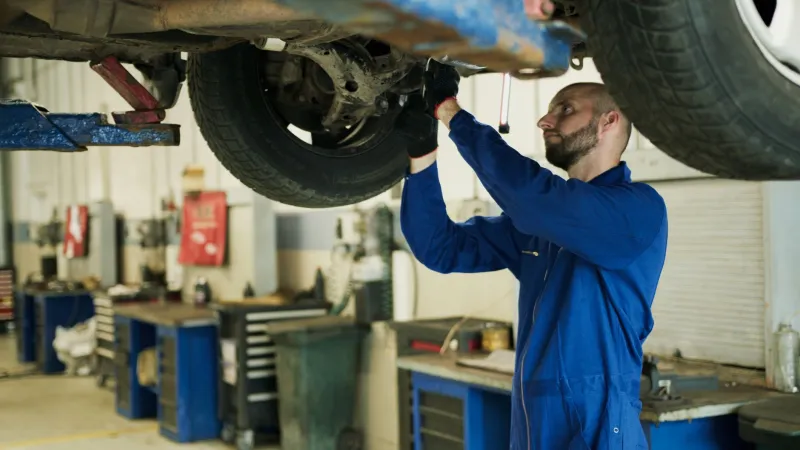
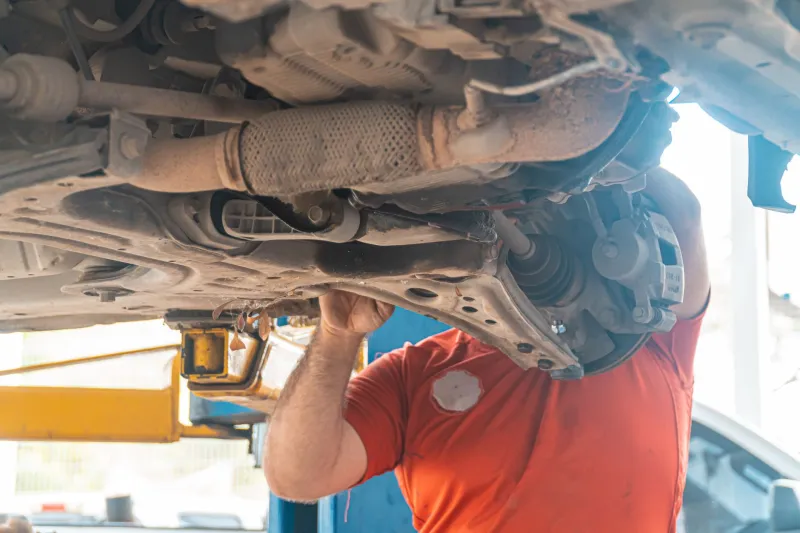
For used vehicles: Have the undercarriage professionally inspected before any treatment is applied. A reputable shop will identify existing rust, assess its severity, and advise on whether treatment is still beneficial or whether structural concerns need to be addressed first. Applying undercoating to a vehicle with active rust is not a solution — it is a deferral.
For vehicles in low-risk regions: Prioritize regular washing of the undercarriage, particularly if the vehicle travels to higher-risk areas seasonally. Many automatic car washes include an undercarriage rinse option that, used consistently, provides meaningful protection at minimal cost. Reserve undercoating investment for vehicles that will be kept long-term or relocated to harsher climates.
The Warranty Language Worth Reading Carefully
Many dealership undercoating packages are sold alongside a corrosion warranty — a document that often sounds more comprehensive than it is. Read the exclusions carefully. Most of these warranties cover only perforation rust (rust that has eaten entirely through a body panel) and exclude surface rust, structural rust, and any damage in areas the applicator designates as pre-existing. Filing a successful claim under these warranties is, by most accounts, an exercise in frustration.
If a protection package comes with a warranty, ask the dealership to provide the warranty document before signing anything. Request clarity on what the claims process involves and which conditions void coverage. A warranty that requires the vehicle to return to the selling dealer for annual inspections — inspections that may themselves generate additional charges — is not the blanket assurance it appears to be.
The Honest Assessment
Undercoating is not a scam in principle. Applied correctly, to a properly prepared surface, using an appropriate product for the climate and the vehicle's condition, corrosion protection has genuine value. The problem is that the dealership sales environment is not designed to deliver that nuanced assessment. It is designed to sell a package efficiently at a margin that rewards the dealership, not necessarily the customer.
At Carshen Garage, the position is straightforward: trust the inspection before the invoice. Any recommendation for undercoating or rustproofing should follow a thorough visual assessment of the vehicle's current condition, an honest conversation about regional risk, and a clear explanation of what the specific product being applied will and will not do. Anything less is a sales pitch dressed in the language of protection.