What Diagnostic Tools Miss About Idler Pulleys — And Why the Belt Pays the Price

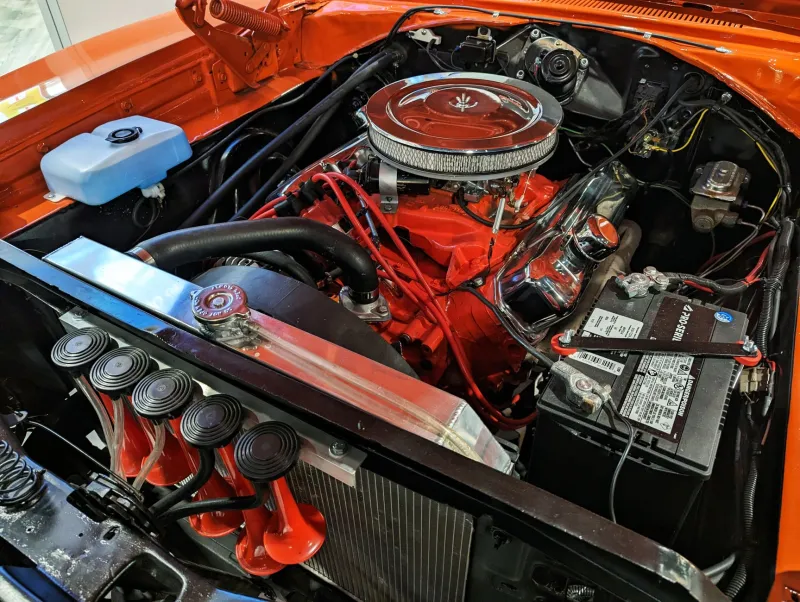
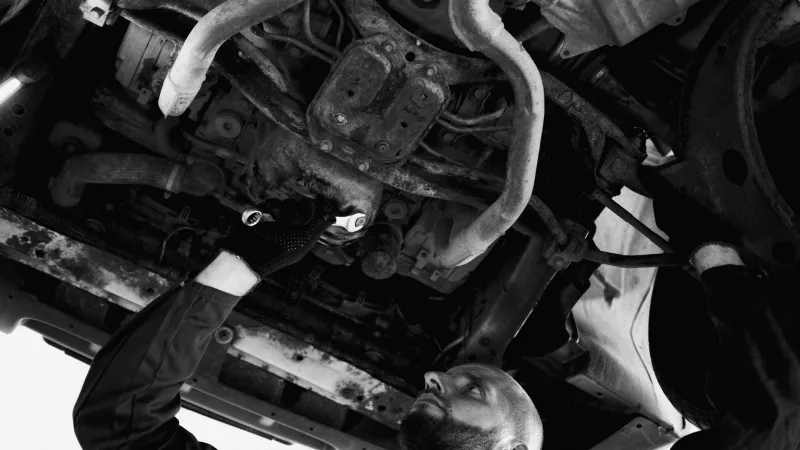
Photo: mechanic inspecting serpentine belt and idler pulley engine bay, via character.ai
Modern vehicle diagnostics have transformed how shops identify mechanical problems, yet idler pulley degradation continues to slip through the cracks of even the most sophisticated scan tools. By the time a failure registers — or more accurately, fails to register — the damage has often already spread to the alternator, power steering pump, and belt itself. Understanding why these components evade early detection is the first step toward protecting your vehicle from a costly cascade of repairs.
The Diagnostic Blind Spot No One Talks About
When a vehicle enters a shop for a routine service, the technician's first instinct is often to plug in an OBD-II scanner and read stored fault codes. This is a reasonable starting point. For engine misfires, oxygen sensor failures, and emissions-related issues, that approach works well. For idler pulleys, it is essentially useless.
Idler pulleys do not communicate with your vehicle's electronic control module. They carry no sensors. They generate no fault codes. They exist entirely outside the digital conversation happening between your engine management system and the diagnostic port under your dash. This means that no matter how advanced your shop's scan tool is, it will never tell you that an idler pulley bearing is beginning to fail.
This is not a flaw in the technology so much as a fundamental misunderstanding of where that technology's authority ends. Scan tools are extraordinarily capable within their domain. Idler pulleys simply do not live in that domain.
What Wear Actually Looks Like — Before the Catastrophe
Idler pulley degradation follows a predictable progression, which makes it particularly frustrating that so many failures are described as sudden. They are not sudden. They are unobserved.
The earliest stage of failure typically involves bearing roughness. The internal bearing races accumulate microscopic pitting and wear, creating subtle resistance in the pulley's rotation. At this stage, a trained technician applying manual pressure to the pulley during a belt-off inspection will detect a grinding or gravelly sensation. This is not a dramatic symptom. It requires deliberate, hands-on attention.
As degradation continues, the bearing develops play. The pulley begins to wobble slightly on its axis. This introduces lateral stress on the serpentine belt — stress it was never designed to absorb. The belt begins to track unevenly across its path, accelerating wear on its ribs and edges in ways that are visible under close inspection but easy to dismiss as normal aging.
The final stage before outright failure involves heat. A seizing bearing generates significant friction, which transfers heat to the pulley housing and, critically, to the belt running over it. A belt that has been subjected to localized heat exposure loses tensile strength in that section, making it far more susceptible to cracking or snapping under load.
Each of these stages is observable. Each of them requires a technician who is looking for them rather than waiting for a warning light that will never come.
The Acoustic Clues Most Inspections Miss
Sound is one of the most reliable early indicators of idler pulley trouble, yet it is also one of the most commonly misdiagnosed categories of engine noise. A degrading idler pulley bearing typically produces a high-pitched chirp or squeal at idle that may change pitch or disappear as engine speed increases. This behavior causes many technicians — and virtually every vehicle owner — to assume the noise originates from the belt itself.
Belt dressing gets applied. The noise temporarily subsides. The underlying problem continues.
A more advanced bearing failure produces a grinding or rumbling tone that persists across RPM ranges. This sound is often described by drivers as coming from the engine generally rather than from any specific location, which further complicates identification without a direct mechanical inspection.
The appropriate diagnostic response to any accessory drive noise is to isolate each rotating component individually. A mechanic's stethoscope applied directly to the pulley housing will localize the noise source with reasonable precision. Alternatively, removing the serpentine belt and spinning each pulley by hand allows a technician to feel and hear bearing roughness that would otherwise be masked by operational noise. Neither of these steps requires expensive equipment. Both require time and intention.
Why the Belt Absorbs the Cost of Ignoring the Pulley
The serpentine belt is the most visible component in the accessory drive system, which makes it the most common target when something goes wrong. When a vehicle arrives with a shredded or cracked belt, the instinct is to replace the belt and return the car to service. This approach is not wrong, exactly — but it is incomplete in a way that virtually guarantees a repeat failure.
A belt that has been running over a degraded pulley has sustained damage that is not always visible to the naked eye. Heat exposure, lateral tracking stress, and uneven loading all compromise the belt's structural integrity in ways that may not manifest as visible cracking until the belt is already on the verge of failure. Replacing the belt without addressing the pulley condition that caused the damage is a repair that will need to be repeated far sooner than it should.
More significantly, a pulley that fails completely — seizing or shedding its outer race — can destroy a belt in seconds. That belt, under tension and moving at speed, becomes a significant threat to surrounding components. Alternators, power steering pumps, and air conditioning compressors have all been damaged by belt failures that originated with a pulley nobody inspected carefully enough.
What a Proper Inspection Protocol Should Include
At Carshen Garage, our position is straightforward: any service that involves the serpentine belt — whether that is a scheduled replacement, a tensioner inspection, or a response to an accessory drive noise complaint — should include a deliberate, hands-on evaluation of every pulley in the system.
That evaluation includes removing the belt and spinning each idler pulley by hand to check for bearing roughness, play, or noise. It includes a visual inspection of pulley faces for scoring, glazing, or edge wear that indicates misalignment. It includes checking the pulley mounting hardware for looseness or corrosion that could affect tracking geometry.
None of this is exotic. None of it requires a specialized tool beyond what any competent shop already possesses. What it requires is a commitment to the kind of systematic inspection that prevents small problems from becoming large ones.
The Dashboard Will Not Save You Here
For drivers accustomed to relying on warning lights as their primary alert system, idler pulleys represent a genuine vulnerability. There is no idler pulley warning light. There is no dashboard indicator that illuminates when a bearing begins to degrade. By the time an idler pulley failure produces a symptom dramatic enough to enter the driver's awareness — a sudden noise, a belt that has come loose, an alternator that has gone offline — the repair bill has already grown substantially.
The protective mechanism here is not technology. It is regular, thorough inspection by a technician who understands where the diagnostic tools end and where hands-on mechanical judgment begins. Scheduling routine accessory drive inspections, particularly as a vehicle approaches and exceeds 60,000 miles, is the most reliable way to catch idler pulley degradation before it claims the belt and everything connected to it.
The serpentine belt gets the attention. The idler pulley earns it.