The Domino Effect Under Your Car: How a Worn Suspension Destroys Everything Else
When drivers think about suspension problems, they tend to imagine comfort — a rougher ride, more road vibration, a car that bounces over bumps with less composure than it once did. What they rarely anticipate is the bill that arrives several months later for brake rotors, a set of prematurely destroyed tires, and a steering rack that a technician swears is failing independently.
In many of those cases, the steering rack is fine. The brakes were fine. The tires were fine — until the suspension wasn't.
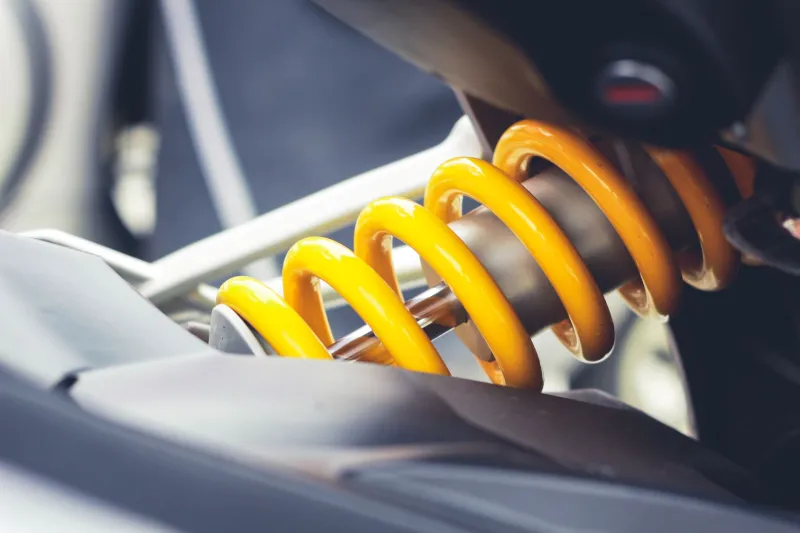
Understanding the interconnected role that struts, shocks, control arm bushings, and ball joints play in your vehicle's overall mechanical health is one of the most valuable things a driver can do to protect their long-term ownership costs. The suspension system does not exist in isolation. It is the foundation upon which every other safety-critical system operates.
What the Suspension Is Actually Doing
At its most fundamental level, the suspension system has two jobs: keeping the tires in consistent contact with the road surface, and isolating the vehicle's structure from the forces generated by that contact. Every component in the system — from the strut housing to the smallest rubber bushing — contributes to both functions simultaneously.
When any component in that system begins to fail, it does not simply degrade its own performance. It changes the geometry of how the wheel sits relative to the road. Camber, caster, and toe angles — the precise measurements that define wheel alignment — begin to drift. And when wheel geometry drifts, the consequences spread outward in every direction.
The Tire Connection: Wear Patterns That Don't Lie
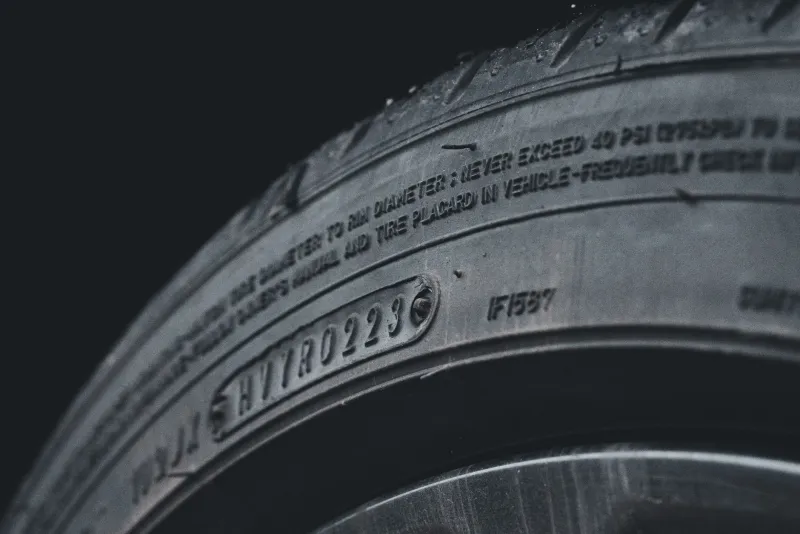
Tire wear is one of the most diagnostically honest indicators of suspension health available to a driver or technician. Healthy suspension geometry produces even, predictable tread wear across the full contact patch. Deteriorating suspension geometry does not.
Worn struts allow excessive wheel movement during acceleration, braking, and cornering. This movement causes the tire to contact the road at inconsistent angles, producing the characteristic cupped or scalloped wear pattern — a series of high and low spots around the tire's circumference — that is virtually diagnostic for shock or strut failure.
Control arm bushings that have cracked or collapsed allow the wheel's alignment angles to shift dynamically under load. The result is frequently inner or outer edge wear — a tire that appears fine in the center but is being aggressively consumed on one side. This pattern is often attributed to alignment, and the vehicle gets aligned. Within a few thousand miles, the edge wear returns. The alignment was not the root cause. The bushing was.
In either scenario, the tire is being destroyed by a problem that could have been identified and corrected far more cheaply than a set of replacement tires.
How Worn Suspension Compromises Your Brakes
The relationship between suspension integrity and braking performance is less intuitive but equally significant. Effective braking depends on consistent tire contact with the road surface during the deceleration event. When the suspension cannot control wheel movement properly, that contact becomes inconsistent.
Vehicles with worn struts exhibit a pronounced nose-dive under hard braking — the front of the vehicle dips sharply while the rear tends to rise. This weight transfer is normal to a degree, but degraded struts allow it to become excessive. The result is uneven loading across the brake rotors and pads, which accelerates wear asymmetrically and can contribute to brake judder — the pulsing sensation felt through the pedal that most drivers associate with warped rotors.
In many cases, those rotors are replaced. The judder returns. The struts, which were the actual origin of the problem, remain in service.
Regional Differences in Suspension Degradation
Not all suspension systems age at the same rate, and geography plays a substantial role in determining how quickly components deteriorate.
In the northern United States — states like Michigan, Ohio, Wisconsin, and Minnesota — road salt is the primary accelerant. Salt accelerates corrosion of metal suspension components and aggressively degrades rubber bushings and bump stops. A vehicle driven year-round in the Rust Belt may require suspension attention at 60,000 miles that a comparable vehicle in the Southwest would not need until well past 100,000.
In the Sun Belt and Southwest, the threat is different: prolonged UV exposure and heat cycles dry out rubber components more rapidly. Bushings crack and lose their compliance. Ball joint boots deteriorate, allowing contamination into the joint itself. The failure mode differs, but the diagnostic consequences — drifting geometry, cascading wear — are comparable.
Urban environments present their own challenges regardless of region. Potholes, road seams, and curb impacts deliver high-impact shock loads that can accelerate wear in components that might otherwise last considerably longer on smoother surfaces.
A Practical Inspection Checklist
Many suspension problems are accessible to the observant driver without any specialized tools. The following checks can be performed safely in a driveway or parking lot.
The Bounce Test: Press firmly down on each corner of the vehicle and release. A healthy strut or shock should return the corner to ride height and stop within one controlled oscillation. If the corner continues to bounce two or three times, the damper is likely worn.
Visual Bushing Inspection: With the vehicle on a level surface, crouch and examine the rubber bushings visible at the ends of the control arms. Cracking, tearing, or visible separation from the metal sleeve indicates the bushing has lost structural integrity.
Steering Wheel Behavior: Excessive wandering at highway speeds, the need to make constant small corrections, or a steering wheel that does not return to center after a turn can all indicate worn tie rod ends, ball joints, or control arm bushings.
Tire Wear Audit: Examine all four tires carefully for the edge wear and cupping patterns described earlier. If you find them, the suspension — not the alignment — should be the first area of investigation.
Noise Under Load: Clunking or knocking sounds when traversing speed bumps, pulling in and out of driveways, or navigating parking lot transitions are among the clearest audible indicators of worn ball joints or degraded bushings.
The Diagnostic Challenge
One reason suspension deterioration generates such costly downstream consequences is that it is frequently misdiagnosed at the point of service. A vehicle presenting with premature tire wear gets new tires. One with brake judder gets new rotors. A car with steering wander gets an alignment. Each of these interventions treats a symptom while the cause continues to operate.
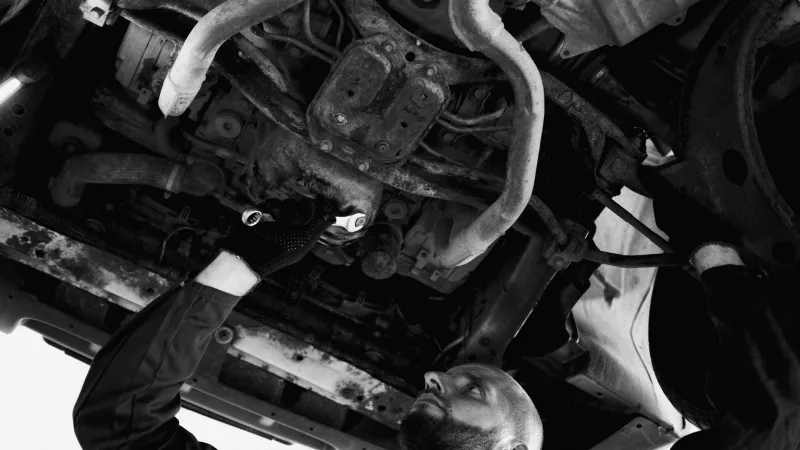
Effective suspension diagnostics require a technician who examines the system as an integrated whole rather than responding to individual complaints in isolation. At Carshen Garage, our diagnostic process is built around that principle — because identifying the actual source of a problem is the only way to ensure the solution actually holds.
If your vehicle is consuming tires faster than it should, pulling to one side, or generating noises that weren't there a year ago, the answer may not be in the brake system, the alignment rack, or the tire shop. It may be in the suspension — quietly dismantling everything above it.